
Updated: 2026-06-17|Rents, wages and visa quotas change easily; for actual figures, refer to official announcements.
When many people pick a city for their working holiday, the first question is “where is the most fun,” but only after settling in do they discover that what really decides quality of life is a few other things: how quickly you can find work, whether rent will eat up your savings, whether the commute is smooth, and whether you can handle the winter. This piece isn’t trying to give you a single “best city” answer; instead it breaks choosing a city into a few facets you can compare against each other, so you can match them to your own goals.
First, one premise: the Working Holiday under International Experience Canada (IEC) is an open work permit — it isn’t tied to an employer, and you can switch jobs and cities, so you don’t have to bet on the right location from the start. But your first landing spot will still affect your cash flow and your mood for the first three months. Each country’s age limit (mostly 18–30 or 18–35), quotas and opening rounds are adjusted every year, so please refer to the official IRCC IEC page.
Before looking at cities, honestly answer three questions for yourself, because with different goals the ranking flips entirely. Do I need to “start working fast”? If your savings are thin and you want income as soon as possible, head for the big cities with high job density. Do I want to “save up money”? If your goal is to bring a sum home or keep traveling, then rent and cost of living should be weighted highest. Do I put “experience” first? If you want to ski, want mountains and sea, want to live well, then accept that income and savings won’t look too pretty. Most people are a mix of all three, but usually there’s one they care about most; rank your priorities first, and the comparison below will mean something.
Rather than a city-by-city running account, I’ve sorted the popular landing spots into a few “types,” each set against its own pros and cons:
| City / Region | Strengths | Who it suits | Main risk |
|---|---|---|---|
| Vancouver | Plenty of jobs in food service, hospitality, the outdoors and tourism; backed by mountains and sea, a good sense of life | People who want to balance work with outdoor life in an English-speaking environment | The highest rents in the country; get the budget wrong and it’s easy to live paycheck to paycheck |
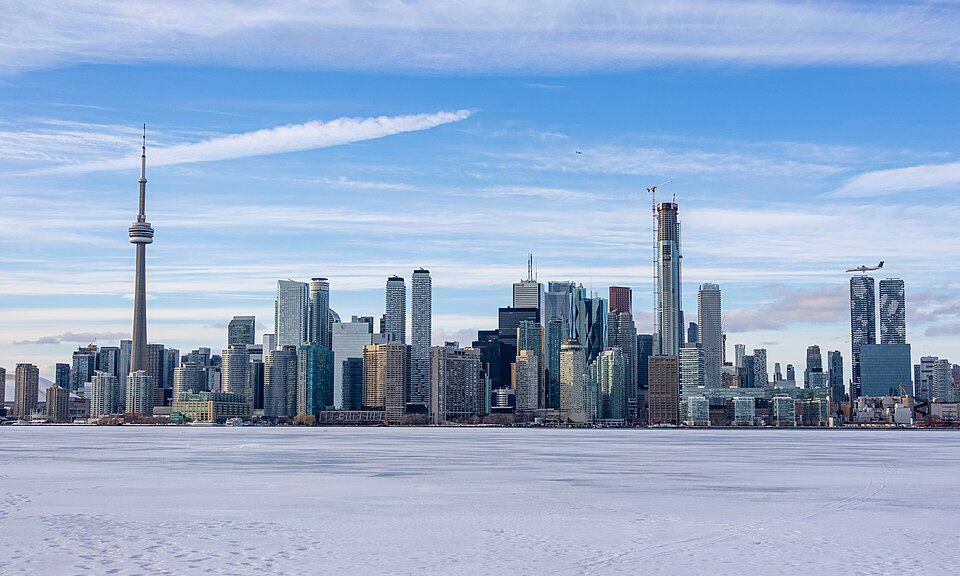
| Toronto | The broadest industries, the most jobs, dense city resources | People who want to find work fast and build up a résumé | Fierce competition, long commutes; rents second only to Vancouver |
| Calgary / Edmonton | Alberta has no provincial sales tax, a relatively manageable cost of living, and is close to the Rockies | People who want to save money without being completely cut off from nature | Bitterly cold winters; the city pace differs from coastal cities |
| Montréal | The most affordable rents among big cities, a strong cultural atmosphere | People who want to control costs and are interested in French-speaking culture | Many jobs require French; English-only options are more limited |
| Banff / Whistler | Hotel, ski-resort and tourism jobs are concentrated here, often with staff accommodation included | People who put the skiing / tourism experience first | Work is clearly seasonal; accommodation slots are sought-after and you have to follow the peak season |
How to rank these three lines: finding work, saving money, having fun
First, look at where it’s easiest to find work. Purely by number of jobs and industry diversity, Toronto usually ranks first and Vancouver second — both cities’ service, food and retail sectors are short of people in peak season. Alberta’s Calgary and Edmonton have opportunities in energy and services, but the industry concentration is high and the business cycle has a clearer impact. Resort towns like Banff and Whistler have very concentrated jobs (almost all hotels and tourism); the downside is the big gap between off- and peak seasons. To check actual openings, you can go straight to Job Bank Canada and look at demand by city and industry.
Next, look at where it’s cheapest, a line almost the opposite of “easiest to find work.” Rent is the biggest fixed expense on a working holiday, and the gap between cities is large: according to Rentals.ca’s 2026 national rent report, a one-bedroom apartment in Vancouver is still among the most expensive of the big cities (around 2,000 Canadian dollars or more, with apartments overall even higher); a one-bedroom in Toronto is around 2,200 Canadian dollars, and Montréal is around 1,700-something Canadian dollars. Alberta (Calgary, Edmonton) is lower overall, and with no provincial sales tax it’s quite friendly to people who want to save. One special reminder: in 2026 rents in most big Canadian cities are actually trending down, and these numbers change every month, so refer to the latest market reports and don’t treat the rough figures here as set prices.
You also have to look at wages together with that. In 2026 the minimum hourly wage differs a lot by province: British Columbia rose to 18.25 Canadian dollars per hour as of June 1, Ontario rises to 17.95 as of October 1, while Alberta stays unchanged at 15.00. In other words, BC has the most expensive rent but also the highest base wage; Alberta has the lowest base wage but a relatively manageable cost of living — so “net savings” has to count income and expenses together, you can’t look at a single number. You can double-check each province’s latest hourly wage on the Government of Canada minimum wage page.
Finally, where it’s most fun, and this line is very personal. For people who love the mountains and snow, Vancouver, Banff, Whistler and Vancouver Island are almost the top picks; for those who like big-city culture, nightlife and diverse cuisine, Toronto and Montréal are more to their taste. Whether Montréal’s French-speaking culture is a plus or a barrier depends on your attitude and language ability. Besides the official gateways above, for a city’s employment and population data you can refer to Statistics Canada, and for pre-trip safety and entry advisories see Travel.gc.ca.
A few pitfalls newcomers most often fall into
Having watched plenty of people get stuck early on, the reasons are largely the same. The most common is only looking at the cities popular on social media and booking flights without checking them against your own goals; next is not having prepared at least three months of living expenses, so you rush to take any job the moment you land. Another big pitfall is underestimating how hard finding housing is — viewing competition in popular cities is fierce, and without lining up listings and a deposit in advance, it’s easy to end up in expensive short-term rentals first. On top of that, not having an English (or French) résumé will directly cut your interview chances; and ignoring the winter climate and commute distance may land you somewhere cheap but with a two-hour daily commute, waiting for the bus at minus twenty degrees.
For preparation, this only includes things genuinely relevant to a working holiday, with no travel tickets crammed in. Before landing, sort out communications (a comparison of Canadian eSIMs / local numbers) and cold-weather gear, which can save you the chaos of the first few days. To learn more about housing and life details, you can go on to read this site’s Canada Life Guide; and if you still want to plan travel routes before your trip, the Canada map can help you see the relative positions of cities and attractions all at once.
Even if you’re only staying a few months, it’s worth doing this homework first. A short stay still runs into the same basics — internet, transport, short-term rentals, payments and healthcare — so getting a clear grasp of a city’s costs and job structure first means far fewer detours after you land; and the open work permit of a working holiday lets you switch cities anytime, so understanding the differences first gives you more direction if you want to adjust later.
Leave a Reply