
Updated: 2026-06-17 | Real-time information is subject to official announcements
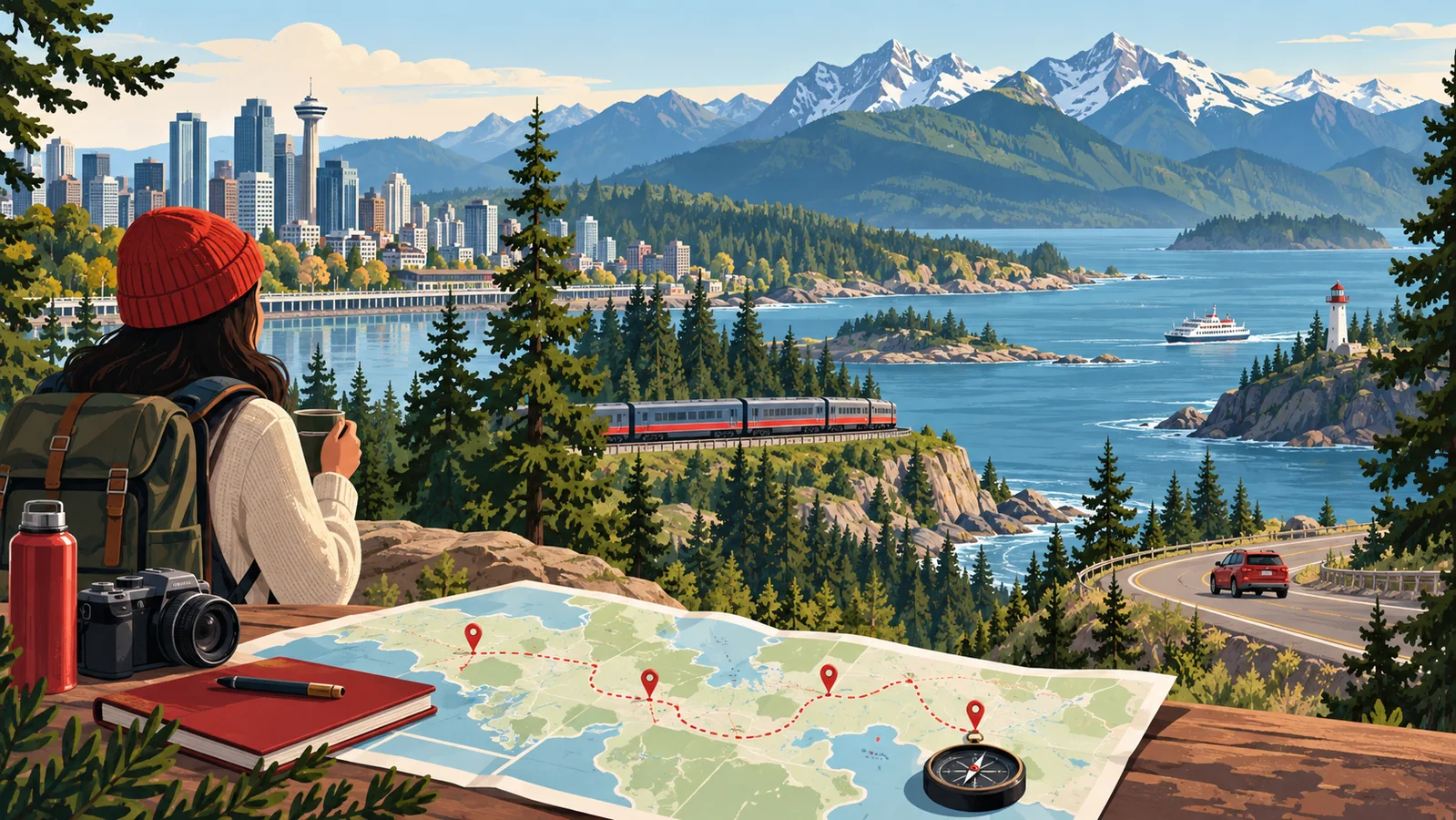
The freedom of driving in Canada really is high, but it is not quite the “rent a car and hit the road” that many people imagine. The biggest gap usually comes down to two things: one is distance — two points that look close on the map often take several hours to drive between in reality; the other is weather — the same road that is smooth in summer can look like a completely different beast in winter because of snow conditions or ice. This article pulls together the few stages where I most often got stuck while planning and researching. The point is not to list attractions, but rental terms, route pacing, and the things you really need to confirm before getting on the road in winter.
First, on whether self-driving suits you: it is best for people who want to explore national parks, coastlines, and small towns, or who want to control their own pace. Driving within cities is not necessarily required — parking in downtown Toronto and Vancouver is expensive and hard to find, and public transit is actually more hassle-free. If 90% of your itinerary is in the city, renting a car is very likely to cost more money and add trouble. Conversely, for routes like the Rocky Mountains, the Sea-to-Sky Highway, the Quebec countryside, or the Atlantic provinces on the east coast, it is almost hard to fully enjoy them without a car. A simple rule of thumb: the higher the proportion of “no convenient public transit between attractions” in your itinerary, the greater the value of self-driving. You can plan your stopover cities and routes together with Canada tourist attractions and the Canada travel map.
Car Rental: The Terms Are Worth Your Time More Than the Daily Rate
Many people only compare the price per day, but what really affects your wallet and your itinerary are the terms below. We recommend confirming each item before booking:
| Item | What to confirm | Where it is easy to get caught out |
|---|---|---|
| Driver age | In most parts of Canada the minimum rental age is about 21 (some operators in Quebec and Saskatchewan allow 18) | Drivers under 25 usually have to pay a “young driver surcharge,” roughly CA$15–35 per day depending on the operator, and may be restricted from renting large SUVs, vans, and similar vehicles |
| Insurance | Collision coverage (CDW/LDW), third-party liability, and whether it is already included in the quote | Low daily rates often do not include insurance and you only get charged for add-ons at the counter; you should also check the terms of the rental insurance bundled with your credit card in advance |
| Mileage | Whether it is unlimited mileage, or has a daily mileage cap | A mileage cap is the biggest worry for long-distance road trips; going over it is billed per kilometre |
| Pick-up/drop-off location | Whether one-way drop-off (returning at a different location) is allowed, and any extra fee for airport pick-up | The one-way drop fee can sometimes be quite substantial |
| Winter tires and snow chains | For winter trips, confirm whether the vehicle is fitted with winter tires and whether you need to bring your own snow chains | Some provinces legally mandate winter tires in winter, explained separately below |
| Inter-provincial / cross-border | Whether you can drive to other provinces or enter the United States | For cross-border travel you must notify the operator in advance and confirm the documents; being stopped unexpectedly is a real hassle |
The ages and surcharges above are the general situation, but the rules differ for every operator and every province. For the official amounts and restrictions, please refer to the page of the rental company you book with.
Winter Driving: Winter Tires Are Not a Suggestion — in Some Provinces They Are the Law
This is the section most travellers overlook and the one that most deserves a careful read. Two provinces in Canada have explicit legal requirements for winter tires, and the contents differ a great deal, so they cannot be lumped together:
| Province | Mandated period | Tire requirement | Notes |
|---|---|---|---|
| Quebec (Québec) | December 1 to March 15 of the following year, each year | Must be “three-peak mountain snowflake” (3PMSF) winter tires or studded tires | Fines for violations are about CA$200–300, and the rule applies to passenger vehicles rented in Quebec |
| British Columbia | October 1 to April 30 of the following year on most designated routes; until March 31 on some non-mountain routes | Tires must be marked “M+S” or with the three-peak mountain snowflake symbol, with a tread depth of at least 3.5mm | Applies to highways with “designated route” signs; non-compliance may result in being turned back and fined |
In other words, if you go to Quebec in winter or drive mountain routes in British Columbia, winter tires are a legal matter, not a preference. When renting, be sure to confirm with the operator whether the vehicle is already fitted with compliant winter tires; driving onto a signed mandated section without them means, at best, being stopped, and at worst, being fined. Although other provinces do not mandate them across the board, winter tires are equally strongly recommended in mountainous and high-snowfall areas. For detailed routes and the latest rules, please refer to the official announcements.
For routes, the two most often added to itineraries are these. The Icefields Parkway (Highway 93) connects the Banff/Lake Louise area to Jasper, running about 288 kilometres in total. It is a world-famous mountain scenic highway with stops along the way such as the Columbia Icefield and Peyto Lake. Note that: gas stations are few on this road, cell signal often drops, mountain weather can change in an instant, and in winter some sections may even be closed because of snow conditions. Before setting out, be sure to fill up the tank, check road conditions, and factor “almost no resupply along the way” into your planning. The Sea-to-Sky Highway (Highway 99) runs about 120 kilometres from West Vancouver to Whistler, a 90-minute to 2-hour drive if smooth. It is a beautiful route that goes from sea views to mountain views, passing through Squamish along the way; it is far more accessible than the Icefields Parkway, and a same-day round trip is feasible, but it is likewise affected by weather and holiday traffic, so in peak season it is advisable to avoid the most congested times.
On itinerary pacing, the most important reminder is not to treat “close” on the map as truly close. Canada is vast, the map scale can be deceiving, and mountain switchbacks, ferry schedules, construction detours, and weather delays can all make the actual drive longer than Google navigation’s ideal estimate. My advice is: plan only one main driving leg per day, and do not stack two or three long-distance legs back to back; on remote stretches, “fill up whenever you see a gas station” — do not gamble that the next stop will have one; in winter, factor in the sunset time, since driving on snow after dark is much harder; and for people not familiar with snow driving, switching to a shuttle or a local tour on certain mountain routes is often both safer and more hassle-free than forcing the drive yourself. To learn about the details of daily car use and life, you can also refer to the Canada life guide.
Fares, road conditions, and rules all change. The official/trustworthy sources most worth bookmarking when planning include: DriveBC for British Columbia’s real-time road conditions, road closures, and highway cameras; 511 Alberta for official road conditions in Alberta (including the Rocky Mountains area); Ontario 511 for Ontario’s real-time traffic and road conditions; and Travel.gc.ca for the Canadian government’s travel and safety advisories. For each province’s winter tire and road rules, please refer to that province’s transportation department official page, and for rental costs, insurance, and age restrictions, please refer to the page of the rental company you book with.
Finally, to answer a frequently asked question: if you do not have your own car, can you rent one and self-drive? Yes. In most regions the minimum rental age is about 21, drivers under 25 usually pay a young driver surcharge of about CA$15–35 per day, and may not be able to rent certain vehicle types; the actual age threshold, surcharge, and insurance terms differ by operator, so please refer to the official page of the rental company you book with, and confirm before pick-up whether insurance and winter tires are already included.


Leave a Reply