
Updated: 2026-06-17|Ticket prices, parking fees, Jasper’s post-disaster opening status and seasonal dates can change easily; please refer to official announcements for the actual situation.
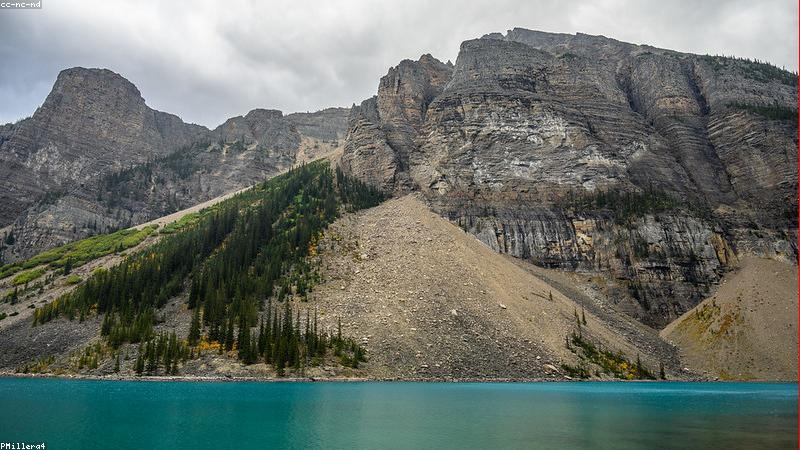
On this Rockies route, the easiest trap isn’t failing to reach the sights — it’s cramming Banff, Jasper and the Icefields Parkway all into three days, which ends up turning the trip into a checklist of rushing from car to car. In fact, the most beautiful things around here are often the ones you only see when you stop — the colour of the lakes in those few days right after the ice breaks up, the trails in the early morning before anyone arrives, the rock walls that suddenly open out on either side as you drive the Icefields Parkway. So rather than planning the sights first, it’s better to decide on the number of days first, then decide whether you want a “deep-dive Banff” or a cross-region “Banff plus Jasper” trip.
Think this through first: how many days do you have, and how far do you want to go
The core of this trip is four blocks: the Banff townsite area (including Lake Louise), the Icefields Parkway (Highway 93), the Columbia Icefield, and Jasper further north. What most people underestimate isn’t the number of sights but the driving time — the Icefields Parkway runs about 232 km one way from Banff to Jasper, roughly a 3-hour drive without stopping, but you probably won’t want to drive it without stopping: the viewpoints along the road alone are worth setting aside a whole day for.
| Days | Suggested approach | Who it suits |
|---|---|---|
| 3 days | Do only Banff + Lake Louise, with a day trip to the first half of the Icefields Parkway | Tight on time, first-time visitors, those who want to hit the highlights |
| 5 days | Explore Banff + Lake Louise thoroughly, then drive the full Icefields Parkway and stay overnight in Jasper | The most comfortable length for most travellers |
| 7-8 days | Stay several nights each in Banff and Jasper, adding hiking or wildlife outings | Those who want slow travel, photography, an in-depth nature experience |
If you only have three days, I’d suggest just dropping Jasper and saving the time for Banff and Lake Louise; forcing a day trip to Jasper just leaves you with neither, rushing the whole way and missing the scenery on this route that is most worth stopping for. To drive the full Icefields Parkway and stay overnight in Jasper, plan at least 5 days.
For getting in and out, the smoothest way for a first visit is to fly in and out of Calgary International Airport, rent a car and drive west for about an hour and a half to two hours into Banff. As a base, most people choose Banff town or Canmore, then extend out to Lake Louise and the Icefields Parkway; to go up to Jasper, it’s best to spend at least two extra nights there. Self-driving is the most flexible, but there are a few traffic restrictions in this area you absolutely need to understand first, or you’ll end up flustered on the spot: Moraine Lake is now completely closed to private vehicles — you can only take the Parks Canada shuttle or a commercial bus, the shuttle must be booked in advance through the official reservation system, in 2026 about forty percent of seats are released when the season opens and the remaining sixty percent only two days before departure, and popular slots are fiercely contested, so be sure to plan ahead. At Lake Louise you can pay to park in the lakeside lot yourself, in 2026 the fee is about CA$42 per vehicle per day, the paid hours run roughly from 3 a.m. to 7 p.m., and the season is roughly mid-May to mid-October; spaces are extremely hard to get, so most people instead park at the Lake Louise Ski Resort Park & Ride (free) and transfer to a shuttle into the lake area. For fuelling up on the Icefields Parkway, take special note: there is only one gas station on the whole road, at Saskatchewan River Crossing, and prices are on the high side, so before setting off you must fill up in Banff, Lake Louise or Jasper. If you’d rather not drive, you can also take a local day tour or intercity shuttle, but the flexibility is much worse and your time at the lakes is tied down; in winter, also watch out for road conditions and snow-tyre rules — Alberta’s real-time road conditions can be checked at 511 Alberta.
There are mainly four bases for accommodation, each with trade-offs. Here’s a summary:
| Location | Pros | What to weigh up |
|---|---|---|
| Banff Town | Restaurants, shops and trip shuttles all concentrated here, the most convenient | Accommodation prices are on the high side, even higher in peak season |
| Canmore | About a 20-minute drive from Banff, often better value for room rates | You have to drive a bit further to get into the national park |
| Lake Louise | Good for early risers, seeing the lake ahead of the crowds | Few options, high per-night price |
| Jasper | Slow pace, a strong sense of wild nature, good for slow travel | Far from Calgary, requires planning an overnight stay |
A little reminder: in peak season (summer and long weekends) rooms at all of these spots need to be booked very early; finding a room last-minute is not only expensive but often simply impossible.
The Icefields Parkway and the Columbia Icefield: set aside a whole day for it
The Icefields Parkway is listed by many as one of the drives you have to do in your life, with lakes, waterfalls and glacier viewpoints along the way. The Columbia Icefield’s Glacier Discovery Centre, in the middle section, sits roughly a 1.25-hour drive south of Jasper and about 2.5 hours north of Banff, and is the staging point where most people stop to eat and join a glacier outing. I’d suggest planning this day as one where “the journey itself is the itinerary” — set off early, leave time for photos and some flexibility, and don’t rush.
When planning Jasper for 2026, pay special attention to the post-disaster situation. Jasper went through a large-scale wildfire in July 2024; the town and parts of the park area were damaged. As of 2026, Jasper has reopened to visitors, most accommodation and restaurants have resumed operating, and major sights such as the Columbia Icefield, Maligne Lake, Miette Hot Springs and Pyramid Lake have also reopened. However, some areas are still being rebuilt in phases and some trails have not fully recovered — for example, Edith Cavell Road and its trails remain closed for the foreseeable future, Maligne Canyon needs to complete a geological assessment before it reopens, and Valley of the Five Lakes is expected to recover gradually through 2026. The actual opening status changes quickly, so before you set off be sure to check Parks Canada’s official site again for the latest announcements; looked at another way, going at this time is also a direct way to support the local community’s rebuilding.
On costs, entering national parks such as Banff and Jasper requires a Parks Canada pass. In 2026 the Banff single-day price is CA$12.25 for adults (18-64), CA$10.75 for seniors (65 and over), free for youth (6-17), and CA$24.50 for a family/group ticket (up to 7 people in one vehicle). One thing to watch in particular: in 2026 there’s a “Canada Strong Pass” offer — from June 19 to September 7, Parks Canada sites charge no admission fee, and camping and overnight accommodation also get a 25% discount; if your trip happens to fall within this window, that’s the equivalent of saving the entire admission cost, a point worth factoring in when planning your dates. When working out your total budget, it’s best to estimate accommodation, car rental and fuel, admission and shuttles, food and drink, travel insurance and a contingency fund separately, rather than fixating on a single ticket price — peak season and weekends are usually more expensive.
One last reminder: lake-area parking and shuttle rules, pass fees, road opening dates and wildlife safety rules all adjust with the season: national park admission, campgrounds, shuttle reservations and road closure information can be checked at Parks Canada (parks.canada.ca), Alberta’s real-time road conditions at 511 Alberta, and for Canada’s overall official travel information you can refer to Destination Canada. What this article puts together is the planning direction and operational key points; for the actual situation, please refer to official announcements. When planning, you can also look alongside this site’s Canada attractions guide and Canada travel map, matching them with your number of days to make the route flow better; for more itinerary write-ups, you can also browse the Canada travel section.
Leave a Reply