
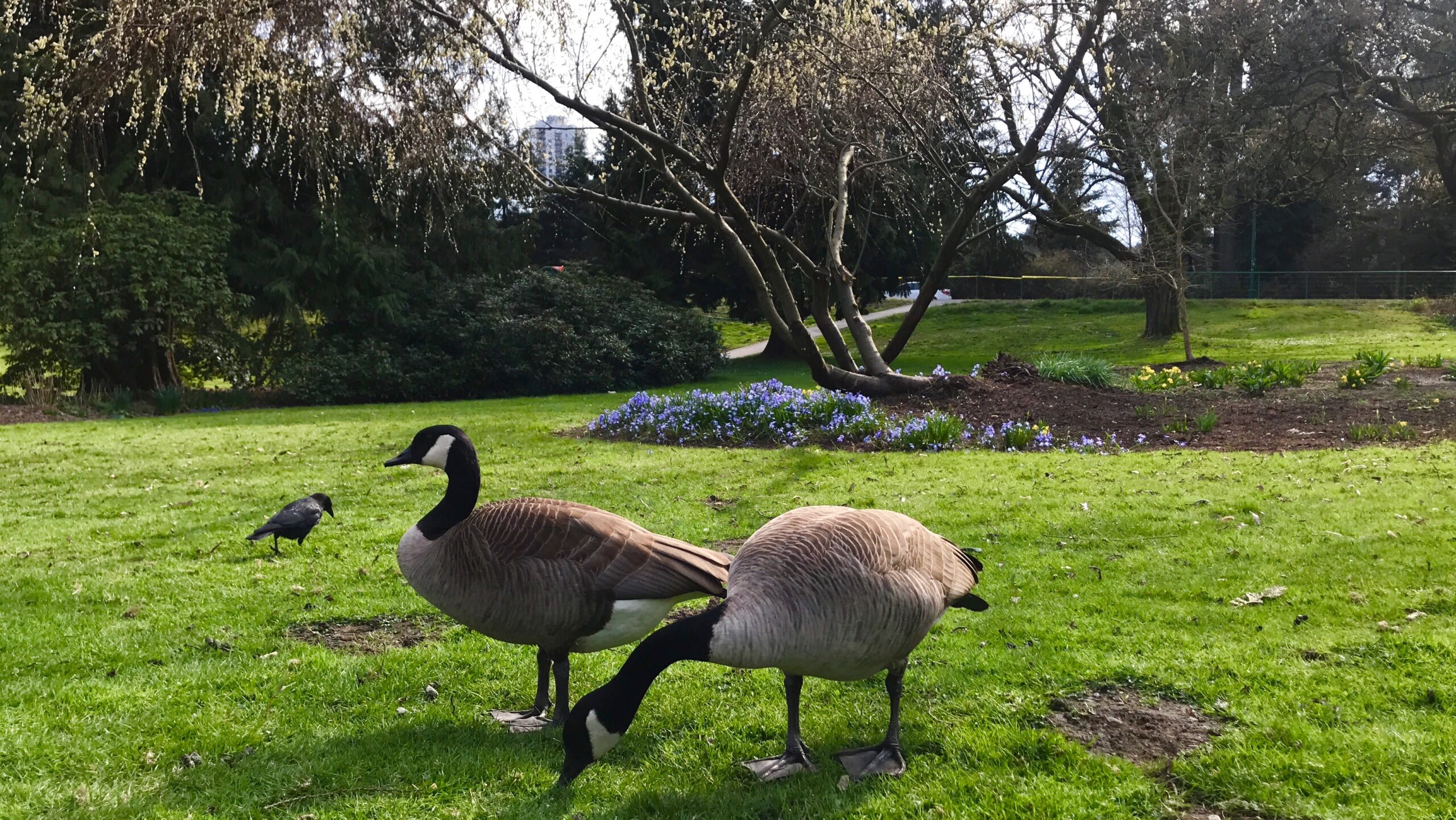
Photographed in Stanley Park, Vancouver, in 2019. The image shows Canada geese on park grass and is illustrative; it does not document current wildlife or safety conditions. Photo by AlterĒvolvere via Wikimedia Commons, CC BY-SA 4.0. The source file has not been manually cropped or edited; the site may serve resized versions under the same CC BY-SA 4.0 license.

Updated 2026-10-16: Official guidance was rechecked, and the image description, geographic scope and safety wording were corrected.
In this 2019 photograph from Stanley Park, Vancouver, two Canada geese and a crow are on park grass. It is an illustrative park scene, not a current image of a downtown sidewalk or a record of present wildlife conditions. The City of Vancouver says Canada geese are commonly found in parks and across the city; when you see them, leaving space matters more than approaching or feeding them.
The City of Vancouver’s Canada goose information describes geese throughout the city and its parks, including resident populations that stay year-round. They use lawns, playing fields and shorelines, and can become defensive during nesting season. When adults have goslings with them, avoid cutting through the group, blocking their route or offering food for a photograph. A small detour and a camera’s zoom make more sense than trying to touch them.
The same boundary applies to other urban wildlife. The City of Vancouver wildlife page lists squirrels, raccoons, rabbits and many birds; seeing an animal near people does not mean it needs to be fed. The city’s wildlife-feeding guidance advises observing from a safe distance, not feeding wildlife and not leaving food that may attract it. Rules can differ in other municipalities. Pack out picnic waste and keep children and pets close.
Raccoons adapt to urban areas in southern British Columbia and may use food left by people. WildSafeBC’s raccoon guidance says not to feed, approach or handle them; a raccoon that is cornered or handled may defend itself. Secure garbage, pet food and other attractants instead of chasing an animal. This is general wildlife guidance, not a single rule for every hotel or lodging property.
Coyotes require a more specific response. The City of Vancouver’s coyote guidance says that if one approaches or acts aggressively, do not turn and run. Make yourself large and loud while backing away slowly. Keep dogs leashed rather than letting them chase. This advice concerns coyotes; it is not a universal wildlife response. In particular, shouting at an approaching coyote should not be confused with how to handle every bear encounter.
Food management remains important at a campsite, but storage must suit the location. WildSafeBC’s camping guidance identifies food, coolers, rubbish, pet bowls and scented toiletries such as toothpaste as attractants. At a frontcountry campsite, use a hard-sided vehicle or designated locker, never the sleeping tent. In the backcountry, establish which bear-resistant storage facilities or containers the location requires; a sealed bag is not a substitute. Clean up cooking and eating areas before leaving the site unattended.
Bear safety cannot be reduced to one instruction to back away. Parks Canada’s bear-country guidance distinguishes a bear that has not noticed you, when you should leave quietly, from one aware of you, when calm speech and slow withdrawal matter. Do not run. Carry bear spray where it is immediately accessible and learn its use beforehand. A bear approaching or making contact requires attention to defensive versus predatory behaviour. Read the complete guidance and local warnings before setting out; do not turn one encounter into a rule for every situation. These bear recommendations come from Parks Canada guidance for the mountain national parks; they are not one response rule for every bear species or encounter across Canada.
When planning a Vancouver visit, include space for wildlife, secure food, use the storage provided at your campsite and check local advisories. Wildlife guidance depends on the species, place and situation, so follow the instructions of the local authority when an advisory applies.