
Updated: 2026-06-19 | Real-time data is subject to official announcements
While recently going through reports on World Cup travel trends, I saw quite a few headlines framing “Singapore joining the viewing boom” as if Asian fans were pouring into North America in droves. After actually reading through the original reporting, the story isn’t that rosy — Singapore was indeed named, but it was listed together with South Korea, Japan, Thailand, Malaysia, Indonesia, Vietnam, the Philippines, India and other Asian markets as a representative of “soaring costs to watch matches in North America, with demand actually falling.” That’s the exact opposite of a “boom,” so I wanted to first set the direction straight for friends who are following this just as closely.
According to an analysis by the travel-industry outlet Travel And Tour World, with airfare, accommodation and ticket costs all rising in tandem, some Asian departure points (including Singapore, South Korea and Japan) were at one point reported to have sharply revised down their World Cup demand for the US — by a margin even described as nearly half; airfare and flight-plus-hotel package prices were reported to be considerably higher than in a normal peak season. These figures currently come mostly from a single industry outlet’s tallies and have not yet been endorsed by official tourism or aviation authorities. It is advisable to treat them as a trend observation rather than a settled conclusion, with official announcements as the final word.
For match-goers here in Canada, this trend actually offers a more practical takeaway: when some international travellers hold back over costs and entry considerations, or even change a pure US itinerary to one that “at least starts from Canada,” the gateway role of Vancouver and Toronto as Canada’s two host cities becomes all the more valued. It’s worth noting that in Sports Illustrated’s ranking of the 16 host cities, Vancouver was placed first and Toronto third, praised respectively for their transport, walkability and overall city experience — one of the reasons many overseas fans are putting the starting point of their trip in Canada.
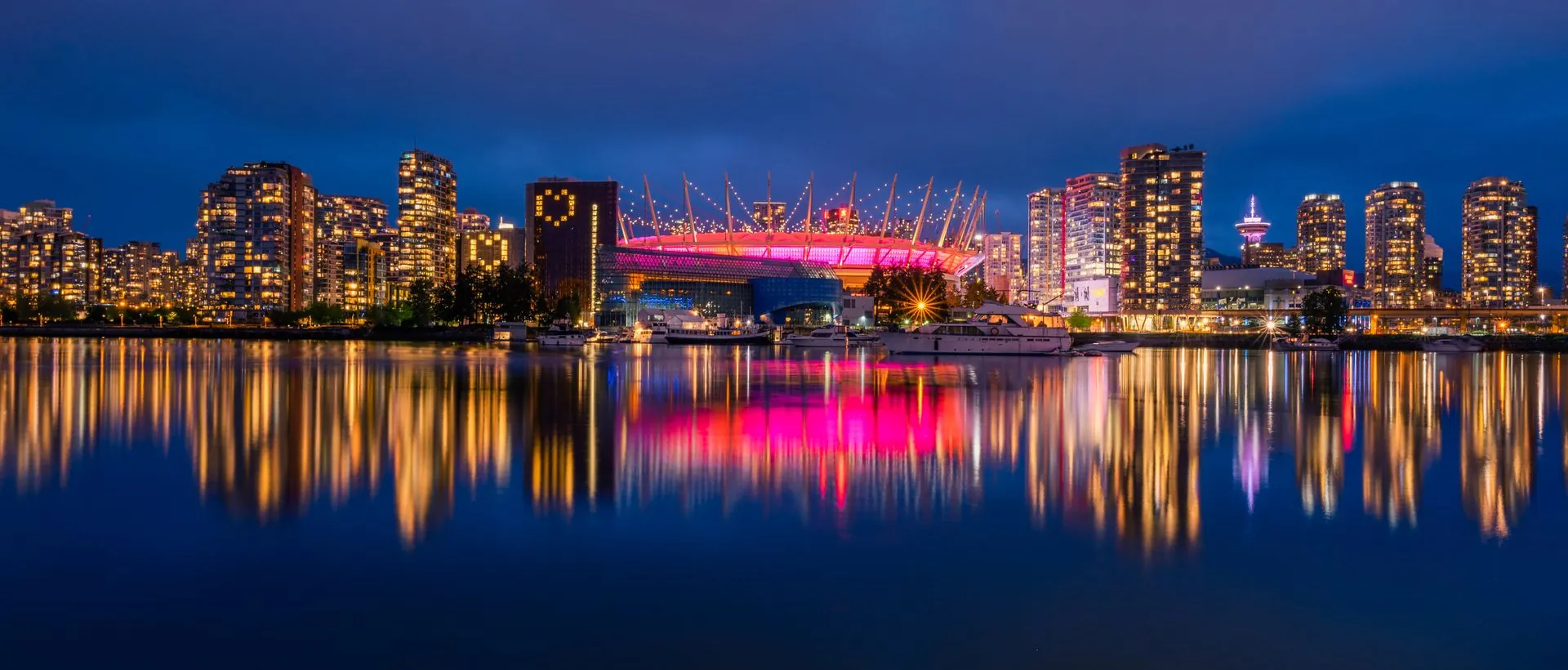
On the venue front you can rest easy: this World Cup’s two match sites in Canada are Vancouver’s BC Place and Toronto’s BMO Field. Canada is hosting 13 matches in total, of which Vancouver’s BC Place has about 7 and Toronto’s BMO Field about 6 to 7 (the exact fixtures are subject to FIFA’s announcement). BC Place underwent extensive renovations to meet FIFA standards, installing natural grass and raising its capacity to about 54,000 seats; BMO Field was also expanded to about 45,000 seats. Both stadiums sit in city-centre areas well served by public transit, which is what underpins their being treated as Canada’s viewing gateways.
As for the occasional claim that lists “Vancouver, Toronto and San Jose” together as the three major viewing gateways of North America, no matching official or mainstream source can currently be found — San Jose is not among the 16 host cities, and Northern California’s matches actually fall at Santa Clara’s Levi’s Stadium (whose neutral name during the tournament is “San Francisco Bay Area Stadium”). This part of the original draft cannot be corroborated, so it is not adopted here, to avoid misleading anyone.
As for the practical details — the transit schedules on specific match days, accommodation price ranges, and the timing of ticket sales and resales — this trend report itself does not spell them out, and the various tallies are still in flux. For friends planning to watch in person, please refer to the official FIFA 2026 website for tickets and the schedule; for transport routes, viewing areas and accommodation tips around the two stadiums in Vancouver and Toronto, you can also read them alongside our on-site Vancouver viewing guide and Toronto viewing guide, which will be far more useful than going by trend headlines alone.
Leave a Reply