
Updated: 2026-06-17|Ticket prices, schedules, opening hours and other changeable information are subject to official announcements.
Toronto isn’t huge, but actually covering its highlights really does take time. The Toronto Islands depend on the weather, Niagara Falls eats up most of a day, and the Distillery District and the markets need to be strolled slowly—cramming it all into three or four days just means rushing around every day. The advantage of seven days is that you can seriously tackle just one or two areas a day and leave some time to sit down, sip a coffee and look out over Lake Ontario. This piece is written for first-timers who don’t want to double back, and it lays out transport, budget and easy pitfalls along the way.
Whether an itinerary flows smoothly is often decided by where you stay. Toronto’s downtown attractions are highly concentrated between the waterfront and Bloor Street, so picking the right location for your accommodation is like saving yourself a stretch of commuting every day. I’d prioritize these areas: the Downtown/Union Station area keeps the CN Tower, the waterfront, the ferry terminal, GO Transit and the UP Express all within walking distance or a stop or two—it’s convenient for heading to Niagara and the airport, and ideal for people who don’t want to transfer. The Entertainment District is dense with restaurants, bars and theatres, with plenty to do at night; the downsides are that it’s a bit noisy on weekends and room rates run high. The TTC subway corridor (such as the Bloor stretch of the Yonge line) is usually friendlier on price, and as long as you’re near a subway station, getting into the core is fast. One reminder: in the summer of 2026 Toronto is one of the FIFA World Cup host cities, and on the days BMO Field has matches (mid-to-late June especially is in high demand), downtown accommodation will be noticeably tight and pricey, so the earlier you book the safer.
Below is a comfortably paced seven-day skeleton that won’t have you sprinting every day. Each day roughly locks onto just one or two main areas, with breathing room between, so even if you suddenly want to linger a bit longer it won’t fall apart—you can fine-tune it to your own pace.
| Day | Theme | Rough Plan |
|---|---|---|
| Day 1 | Downtown warm-up/around the CN Tower | Don’t head far on arrival; loop around the core district, go up the CN Tower for city and lake views, and have dinner in the Entertainment District in the evening. |
| Day 2 | Toronto Islands | A weather-dependent outdoor day: take the ferry from the Jack Layton terminal over to the islands to bike, picnic and look back at the skyline. |
| Day 3 | Museums+Kensington/Queen West | Indoors in the morning (such as the Royal Ontario Museum, ROM), then in the afternoon browse the shops and graffiti alley of Kensington Market and Queen West. |
| Day 4 | Niagara Falls day trip | A full-day itinerary. Take GO Transit, join a day tour or self-drive, returning to Toronto in the evening. |
| Day 5 | Distillery District + St. Lawrence Market | A slower-paced day: photos in the old town’s red-brick district, lunch at the market, and a side stroll through the eastern Old Town. |
| Day 6 | Outskirts or World Cup activity day | Flexible by season: in summer 2026 it can line up with a World Cup match or fan event; otherwise head out to a nearby small town. |
| Day 7 | Flexible shopping and departure | Don’t schedule anywhere too far; leave time for last-minute shopping and packing up slowly before heading to the airport. |
Practical info on a few key attractions
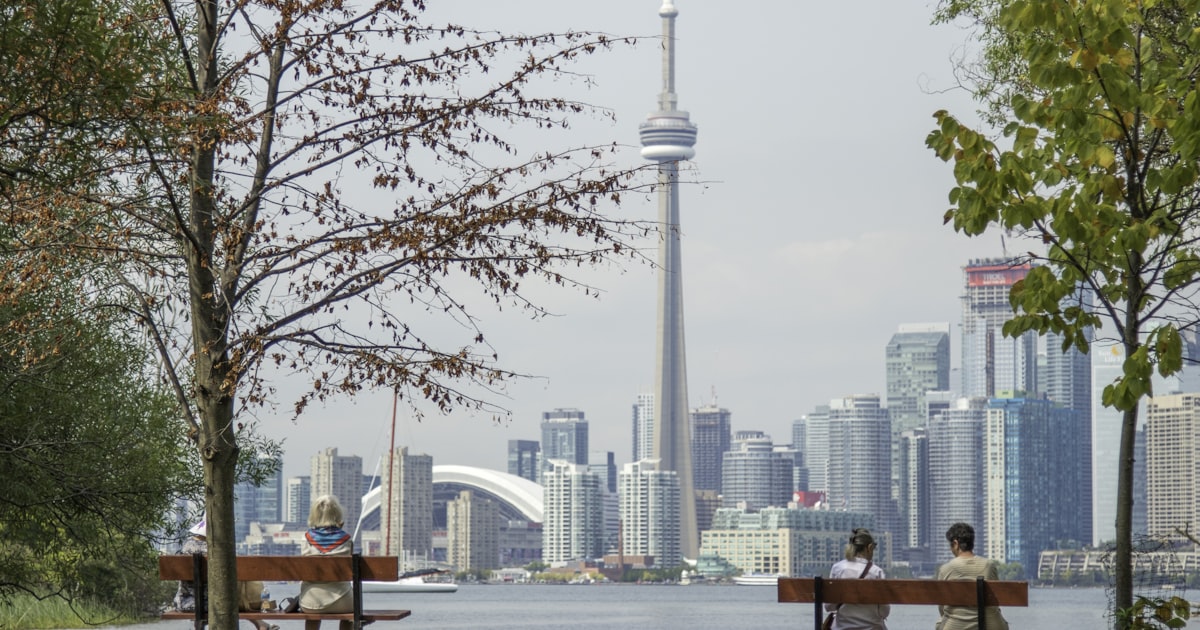
The CN Tower is Toronto’s landmark, and going up gives you a one-shot grasp of how the downtown, the waterfront and the islands sit relative to each other, which is why I habitually put it on Day 1 as a way to “get my bearings.” It’s located at 290 Bremner Blvd, right next to Union Station and within walking distance of the subway station; it suits first-time visitors and anyone wanting to shoot the city’s night views, while those afraid of heights or short on time can skip it. As for cost, the regular observation deck starts at around CAD $47 for adults, with the higher The Top (SkyPod) charged separately; the EdgeWalk, for those wanting to challenge an outdoor walk around the tower, starts at CAD $199+tax with the whole experience running about 90 minutes. Prices and opening hours (generally around 9 a.m. to 10:30 p.m., possibly adjusted in peak season and during events) are subject to official announcements. The views are best on clear days, so you can check the day’s visibility on the official site before deciding whether to go up.
The Toronto Islands are the closest green space to downtown and the best place to switch off, and they pay off most when saved for good weather. For transport, ferries depart from the Jack Layton ferry terminal at the corner of Bay Street and Queens Quay, running on three routes to Centre Island, Hanlan’s Point and Ward’s Island, roughly every 15 minutes in the summer peak. A round-trip ticket is about CAD $9.57 for adults, about $6.15 for students and seniors, about $4.51 for children under 14, and free for under-2s (online tickets are valid through the end of the year, so less worry about lining up). It’s most useful for those with kids, or wanting to bike, picnic and photograph the skyline; the islands’ facilities adjust by season, with the splash and play areas only fully open in summer, so confirm the day’s ferry schedule before setting out.
Niagara Falls is about an hour and a half to two hours’ drive from Toronto, and it’s the nearby spot most worth a standalone day in a seven-day itinerary—don’t force it into half a day. For transport, GO Transit runs trains to and from Niagara Falls on weekends year-round (the Lakeshore West line, operating Saturdays, Sundays and some holiday Mondays), while on weekdays it’s mostly bus connections; if you don’t want to study the timetable you can also join a day tour or self-drive. It’s well worth visiting for first-timers wanting to see the great falls and the surrounding scenery; sightseeing and dining around Niagara skew expensive, so it’s best to nail down your budget first, and the schedule and service status (this line was once adjusted due to a temporary situation and then restored to full service) should follow GO Transit’s official timetable.
The Distillery District and St. Lawrence Market are well suited to being arranged as a slow-paced Old Town day. The Distillery District is a pedestrian zone converted from a Victorian-era red-brick distillery, with no admission fee and free to wander; cafés, small shops, galleries and restaurants are all clustered together, and it’s very photogenic. A bit farther on is St. Lawrence Market—the most common pitfall here is forgetting that it’s closed on Mondays; the South Market is roughly Tuesday to Friday 9:00–19:00, Saturday 7:00–17:00 and Sunday 10:00–17:00 (hours subject to official sources). Don’t miss it if you love browsing markets or want local bites (like the famous peameal bacon sandwich). The two spots aren’t far apart, so they can be slotted into the same day along with a side stroll through the eastern Old Town district.
Those World Cup days: if you’re going, plan ahead
The 2026 World Cup is jointly hosted by the United States, Canada and Mexico, with Toronto one of Canada’s two host cities, and all the matches are at BMO Field (170 Princes’ Blvd, located in Exhibition Place, with the venue temporarily renamed Toronto Stadium during the tournament). Toronto hosts 6 matches in total: 5 group-stage games (June 12, 17, 20, 23 and 26) and 1 round-of-32 knockout match (July 2), with the opening home day on June 12 being Canada vs Bosnia and Herzegovina—the first-ever men’s World Cup match played on Canadian soil. On match days, the area around Exhibition Place and both the TTC and GO will be flooded with crowds, so be sure to leave time for transport and security checks, and book accommodation early too. For exact kickoff times, ticketing and entry rules, refer to FIFA and the official venue announcements. If this trip is mainly about watching football, you can swap Day 6 for a match day and fill in the other days with sightseeing.
Transport, budget and the most common pitfalls
Within the city the TTC (subway, streetcar, bus) is broadly enough; most attractions are reachable by subway, and it’s advisable to use a PRESTO card or a phone ticket to save fumbling for change. For airport trips, rely on the UP Express, which goes directly from Pearson Airport to Union Station—the easiest option; for cross-city nearby directions like Niagara and Hamilton, rely on GO Transit, and if you really want to roam small towns, the lakeshore or flexible routes, self-driving is freer, but downtown parking is expensive and spots are hard to find. Budget-wise, the easiest thing to overspend on isn’t admission tickets but accommodation and cross-city transport—Ontario has a 13% HST, and restaurants usually add another 15%–20% tip, all of which quietly pads the total cost. In practice I estimate accommodation, transport, dining, admission, tax, tip and a contingency fund separately, which is far more accurate than pinning down a vague “how much per day.”
Pulling it together, the four most common pitfalls are: underestimating travel time—Niagara and the Toronto Islands aren’t “a quick stop along the way,” they should be treated as whole segments of the trip; forgetting reservations and closing days—popular restaurants need bookings, and St. Lawrence Market doesn’t open on Mondays; not booking rooms early on event days—during World Cup match days and major events, room rates and availability change fast; no rainy-day backup—it’s best to keep swappable indoor attractions (museums, markets, malls) in reserve on your itinerary. In fact, with a combination like downtown Toronto plus Niagara and the Toronto Islands, seven days is just right: city attractions can usually be digested in half a day to a day, but cross-city trips and day trips each need a whole day, and adding flexibility and a rest day, seven days lets you play it out leisurely without rushing. If time is limited, you can cut the Niagara and outskirts days and compress it into a four-to-five-day pure downtown version.
To extend your planning further, you can refer to our Toronto Travel Guide, check out Canada Tourist Attractions to string your itinerary outward, or confirm the latest match and viewing information in the World Cup Zone. Before you set off, remember to re-check opening hours, ticket prices, weather, road conditions and official announcements once more—Toronto’s weather and event schedules tend to change at short notice more than you’d think.
Leave a Reply