
Updated: 2026-06-19|Real-time information is subject to official announcements
Local outlet Daily Hive published an opinion piece with a headline along the lines of “Vancouver, enjoy the World Cup while it’s here—it really does feel a lot like the 2010 Winter Olympics.” As an editor who has watched this city for a long time, my first reaction after reading it was: spot on. On final day the downtown core was packed with fans in Australian and Turkish jerseys, and that “the whole world is pouring in at once” atmosphere really is a scene Vancouver hasn’t experienced since 2010.
The heart of that opinion piece isn’t actually football itself, but a kind of collective city memory. The author observes that for many younger residents, this World Cup may well be the closest they’ll ever come to “that 2010 feeling”—the world’s gaze briefly fixed on this city, the streets full of strangers from everywhere, civic pride suddenly vivid and shared. The article also notes that an event of this scale doesn’t come along often; the next time Vancouver hosts something on the level of an Olympics or a World Cup could be another generation away. The money has been spent and the event is already underway, so rather than complaining, you may as well seize the moment.
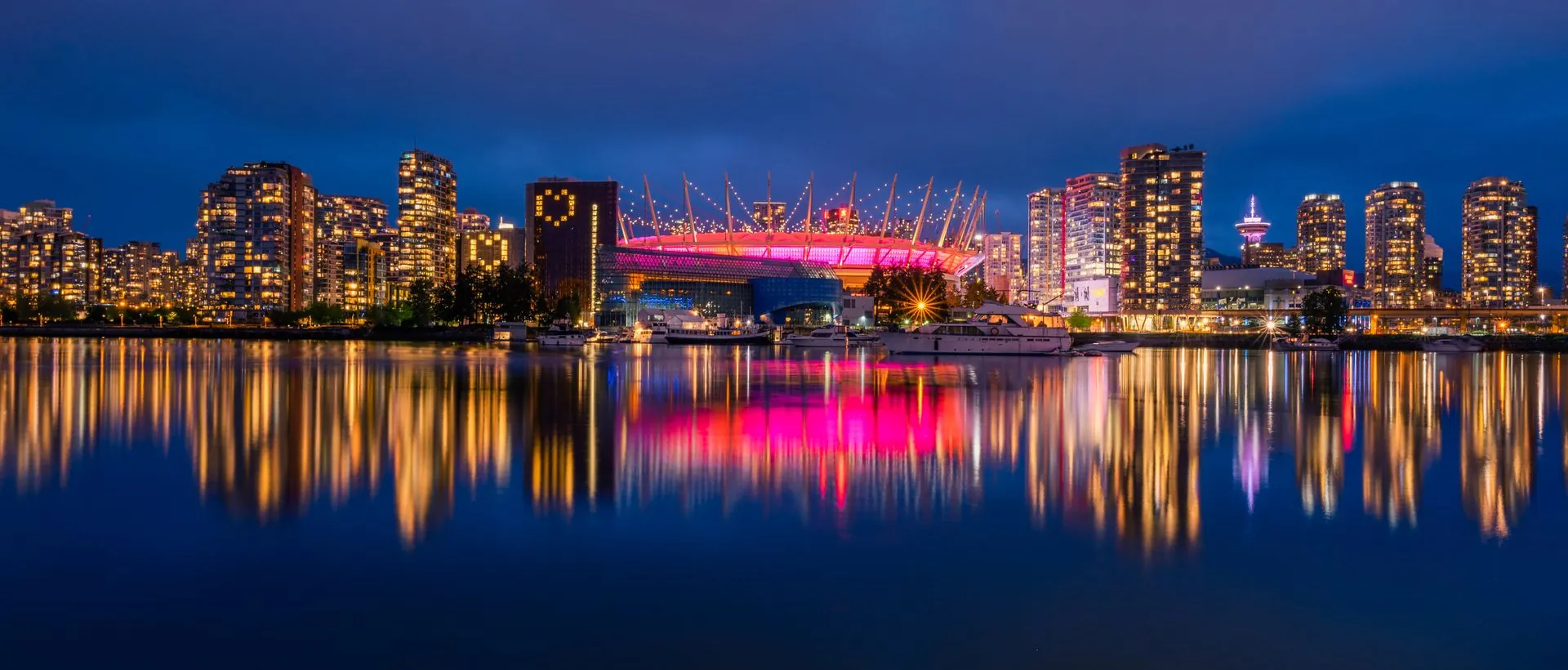
This comparison is worth talking about seriously, because it is both apt and carries one detail that is often gotten wrong. BC Place really was the core venue of the 2010 Winter Olympics; both the opening and closing ceremonies were held there, and it was the first time in Olympic history that a Winter Olympics opening ceremony was held indoors—a milestone moment. So Vancouverites’ impression that this stadium has “carried a global event” is no illusion.
There is, however, one point where the timeline needs to be made clear: BC Place’s famous cable-supported retractable roof was not built “for the 2010 Winter Olympics”; it was replaced after the Games. The 2010 opening and closing ceremonies still used the old inflatable-style roof that had been in place since the stadium opened in 1983; only after the Olympics did the stadium shut down for about sixteen months starting in May 2010 for a major overhaul, reopening in September 2011 with the cable-supported roof it has today, one of the largest of its kind in the world. In other words, the Olympics were the catalyst, not the construction itself—this sequence is often reversed in auto-generated content, so it is corrected here on purpose.
Back to this World Cup: Vancouver’s role is bigger than many people think. BC Place is hosting 7 matches, running from June 13 all the way to July 7, spanning the group stage, the round of 32, and the round of 16. The ones that have local fans most fired up are the two Canada home matches: on June 18 against Qatar, Canada won 6–0 with Jonathan David scoring a hat-trick to claim the team’s first-ever World Cup win; on June 24 they faced Switzerland to close out the group stage. Getting to watch the national team play on a World Cup stage at your home stadium really isn’t something that happens often for Canadian fans.
If you want to plan cross-city viewing, the other host site within Canada is Toronto’s BMO Field, which is hosting 6 matches (including Canada’s opening match). The hosting scale of the two cities can be compared like this:
| Host City | Venue | Matches | Canada Home Matches |
|---|---|---|---|
| Vancouver | BC Place | 7 matches (6/13–7/7) | 6/18 vs Qatar, 6/24 vs Switzerland |
| Toronto | BMO Field | 6 matches | Canada’s opening match |
What really gives me the strongest “2010 déjà vu” is actually the atmosphere outside the venues. Friends who live in Metro Vancouver and can’t necessarily snag match tickets can head straight to the official FIFA Fan Festival—set up at the PNE grounds in Hastings Park, with free admission, an on-site retractable open-air amphitheatre, and multiple big screens broadcasting the matches. In just the first four days after it opened, it drew more than eighty-seven thousand visits; that crowd density really is on the same order of magnitude as the memory of downtown being packed in 2010. Note that the Fan Festival is not open every day (it is closed on certain Mondays, Tuesdays, and Wednesdays), so it’s best to check the day’s schedule before heading out. BC Place sits in a prime downtown location, and on match days the surrounding hotels, restaurants, and bars are everywhere; even if you don’t go inside, the neighbourhood itself is well worth a look.
The site editor’s observation is this: what this World Cup means for Vancouver is different from simply watching a few matches. It is more like a re-enactment of city memory—the last time everyone filled the streets together and got excited about the same thing was sixteen years ago. If you want to take part in person, here in Vancouver there is a more complete Vancouver viewing guide to consult; if you’re heading across cities to Toronto, there is also a Toronto viewing guide. Schedules, ticketing, and venue access details change quickly, so arrange accommodation and transport early, and treat FIFA and the City of Vancouver’s official announcements as the authoritative source.