
Updated: 2026-06-17|Ferry schedules, fares and restaurant hours change easily; please follow official announcements for the actual details
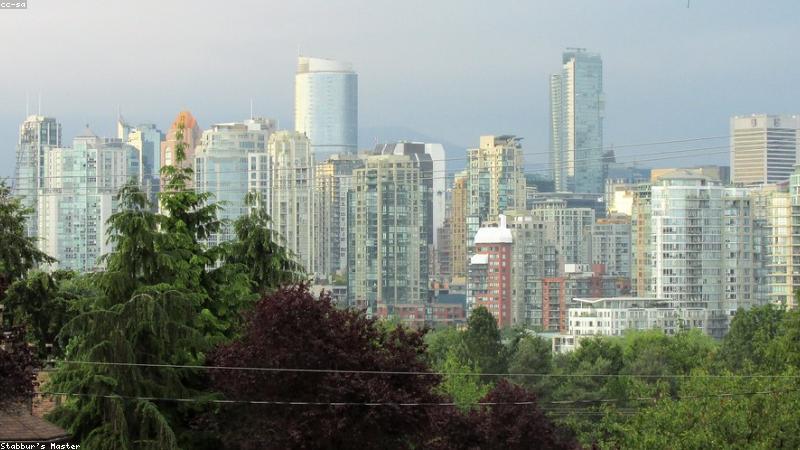
Downtown Vancouver is big, but the areas that actually make you want to slow down and walk are not many, and Yaletown is one of them. It was originally an industrial district of railway switching yards and clustered brick warehouses; later the warehouses were converted into high-ceilinged lofts, restaurants and storefronts, and what was left behind — the narrow lanes, the red-brick façades and the sidewalks raised to loading-dock height — became instead the most recognizable character of this neighbourhood today. If you are only stopping in Vancouver for a day or two, Yaletown is not a must-see major attraction; but if you want to see where locals in Vancouver go to eat, grab a drink, and walk along the water after work, this place feels closer to everyday life than the touristy vibe of somewhere like Gastown.
First, get the location straight: Yaletown sits along the southern edge of downtown Vancouver, on the north shore of False Creek, with its core roughly around Mainland Street and Hamilton Street, and the waterfront — the seawall and parks — lying just to the south. The easiest way to get there is to take the Canada Line to Yaletown-Roundhouse Station; you exit right near Mainland Street and Davie Street, landing you straight in the centre of the district with no transfers or long walks needed. Driving, on the other hand, is the troublesome option here — the streets are narrow, there are many one-way streets, street parking is hard to find and time-restricted, and on weekend evenings at the restaurant peak a spot is nearly impossible. If you are staying downtown, it is best to just walk or take the SkyTrain over; if you really must drive, first use Google Maps to confirm the locations and rates of nearby parkades, rather than circling the block hunting for a street spot.
| Item | The reality |
|---|---|
| Who it suits | People who want to feel the everyday life of downtown Vancouver, who like to walk while eating and having coffee, and who are happy with just half a day without rushing through attractions |
| Suggested stay | About 1.5 to 3 hours; linking up the seawall can stretch it to half a day |
| Best transit | Canada Line to Yaletown-Roundhouse Station, arriving right at the exit |
| Cost feel | Strolling and the seawall are free; the main spending is on restaurants, coffee and bars, and prices in this area run on the high side |
How to walk the neighbourhood more smoothly
What I personally suggest is that, after coming out of Yaletown-Roundhouse Station, you first walk back and forth along Mainland Street and Hamilton Street, the two parallel main streets. The restaurants, bars, cafés and outdoor seating are mostly concentrated here, and the brick walls paired with the raised old-platform sidewalks are Yaletown’s most recognizable picture; on a fine day the patios are almost all full. After walking the streets, head toward the water and link your itinerary onto the False Creek seawall — that way the route wastes the least leg-power. As an aside, this area is exactly where the Roundhouse Community Arts & Recreation Centre stands; the “Roundhouse” in the name comes from the circular roundhouse once used to turn trains around. On weekdays it is the community’s arts and sports space, and it has occasional exhibitions or events, so when passing by you can glance at whether the current show is open — but it is not a ticketed attraction, and there is no need to force it into your itinerary.
The part of Yaletown that truly lets you relax is the False Creek waterfront. Walking toward the water along the southern edge, you connect onto Vancouver’s famous Seawall path. This Yaletown stretch sits on the north side of False Creek and gets sun for most of the day, making it well suited to walking or cycling. The seawall runs west to connect to Granville Island, south winding toward Olympic Village and Science World, and northwest all the way to Stanley Park, so this is in fact one of the entry points that string Vancouver’s waterfront together. The largest green space by the water is David Lam Park, located at 1300 Pacific Boulevard, about a few minutes’ walk from Yaletown-Roundhouse Station; the park has a wide expanse of lawn, ball courts and open water views facing False Creek, and on a fine day, sitting there with a coffee watching the boats come and go is well worth it. One thing to note: the weather here turns quickly, the wind off the water is strong, and Vancouver often gets passing showers, so it is advisable to bring a windproof, waterproof jacket and not just go by the sun the moment you head out.
If you plan to pair Yaletown with Granville Island across the water, you do not necessarily have to make a big loop along the seawall — you can take the small cross-creek ferries on False Creek (Aquabus/False Creek Ferries). Yaletown’s dock is at the foot of Davie Street, near the water; there is also a dock in front of David Lam Park, and from either spot you can board and cross over to Granville Island. The boats are frequent and the crossing is short, making it a very popular way to connect this area. The actual operating hours, intervals and fares are adjusted by season, so before boarding please follow the ferry operator’s official page or on-site notices, rather than the figures fixed in old articles.
A few practical reminders
- Restaurants need reservations: Yaletown is one of the areas with the highest density of restaurants and bars — and the higher prices — in Vancouver; popular spots are often full on weekends, so if you want a patio seat or the dinner time slot, it is advisable to reserve ahead.
- Budget a little loosely: strolling the neighbourhood and the seawall are both free; the spending mainly falls on food and drink. Dining in Canada also adds tax and tip on top, so the bill total is usually a fair bit higher than the menu price — don’t budget by the listed price alone.
- Plan your return ahead for the evening: the neighbourhood still has buzz at night, but you should still mind the return transit and personal safety, so first confirm the SkyTrain’s last train or how to call a ride.
- Pick the weather: Yaletown’s focus is the patios and the waterfront, and the experience is discounted on a rainy day, so if your itinerary allows, try to pick the evening of a clear day.
Yaletown itself is a half-day itinerary, well suited to linking with other downtown areas. If you want to stay somewhere that is convenient for transit and also has a sense of everyday life, you can compare Yaletown together with accommodation around Downtown and Coal Harbour. Its positioning is “seeing the city’s everyday feel and a waterfront walk,” not a landmark-type must-see attraction, so it also suits first-time visitors to Vancouver as a connecting segment for an evening meal and a walk by the water — only, if you are stopping for just a day or two and want to see nature or classic landmarks, remember not to cast it as the lead. If you want to string together your whole Vancouver itinerary and see how to arrange downtown, the seawall and the outskirts, you can refer along with our Vancouver travel guide and Canada attractions roundup.
Leave a Reply