
Updated: 2026-06-17 | Collection days, fees, and recycling contractors change often; before you act, defer to official announcements
For people who have just moved from Taiwan to Canada, the first thing that trips up their “sense of daily life” is often not English, nor the weather, but throwing out the garbage. In Taiwan, the garbage truck rolls down from the end of the alley playing “Für Elise,” and you grab your bag and dash out to take care of it. In Canada, the garbage doesn’t chase you—you have to remember which day it comes—and if you sort it wrong, or drag the bin out at the wrong time, the looks from your neighbors can sometimes be harder to bear than a fine from the city.
What’s more troublesome is that Canada has no single nationwide set of garbage rules. Each municipality sets its own collection days, bin colors, and what can be thrown out, and even “who collects the recycling” differs from province to province. This article uses Vancouver, Toronto, and Calgary—the three cities where settled populations are most concentrated—as reference points, lays out the steps that new immigrants are most likely to stumble over in their first month, and ends with official lookup portals attached to each, because this kind of information really does change.
First, establish one concept: Taiwan’s logic is “the garbage truck comes and I chase it,” while Canada’s logic is the reverse—the garbage is placed in a designated spot fixed at your own doorstep or beside the alley, and the city’s trucks come to collect it on schedule. So what you need to do is two things: sort the garbage into the right streams (general garbage, recycling, food scraps, and yard leaves are usually collected separately), and remember the collection day that corresponds to your address. People living in apartment buildings (Strata / Condo) have it a bit easier; the garbage room and collection are mostly handled in a unified way by property management, and the first thing to do after settling in is to ask the property: which bins are for what, and after what time you can no longer drop garbage in the garbage room. People living in detached houses, basement suites, or townhouses have to keep track of the collection day themselves and drag the bins out to the curb on time.
Residential garbage in Canada is roughly divided into four streams, but first let’s be clear: bin colors and names are not consistent across cities. The table below is meant to help you build the “concept of sorting into streams,” not to take one city’s colors and apply them nationwide. In practice, defer to the guide of the municipality where you live.
| Stream | Common name | Roughly what goes in | Common things to watch out for |
|---|---|---|---|
| General garbage | Garbage / Trash | Non-recyclable food packaging, hygiene products, broken odds and ends | The most restricted; many cities set a cap on volume or weight, and anything over has to be handled separately |
| Recycling | Recycling / Blue Box | Paper, flattened cardboard, plastic bottles and jars, metal cans (glass is collected separately in some cities) | Containers must be rinsed clean and drained; usually cannot be thrown out in plastic bags |
| Food scraps | Green Bin / Food Scraps | Fruit and vegetable peels, eggshells, coffee grounds, tea bags, food remnants, greasy paper | Mostly require a compostable liner; ordinary plastic bags cannot be used |
| Yard leaves | Yard Waste / Yard Trimmings | Fallen leaves, grass clippings, branches (collected seasonally in some cities) | Cannot be mixed with food; branches often need to be bundled and kept to a controlled length |
The most common mistake beginners make is throwing recyclables or food scraps straight into the general garbage. In Canada this is not just “less environmentally friendly”—in many Strata communities you’ll be ticketed or receive a complaint letter, because waste reduction is a policy the city is genuinely pushing. In the first week of moving into a new home, spending ten minutes reading through the local city’s sorting guide is far more worthwhile than getting fined afterward.
How collection works in the three cities of Vancouver, Toronto, and Calgary
For detached and duplex houses in Vancouver (City of Vancouver), the city is responsible for collecting general garbage, food scraps, and yard leaves; recycling, however, is not collected by the city but is collected at your door by GFL Environmental on contract from Recycle BC—this differs from the “the government handles everything” intuition Taiwanese people have, and newcomers often get confused. The way recycling is packed is also fairly distinctive: it’s not simply a single blue bin, but a three-piece set of “yellow bag + grey box + blue box,” and the city / Recycle BC will resupply worn-out containers free of charge (yellow bag about once a year, grey box and blue box about once every three years). To look up the collection day for your own address, the most reliable option is the city’s official lookup tool—enter your street address and it will show the next several garbage, food scraps, and recycling dates, as well as whether this week is the “garbage + recycling” or “garbage + food scraps” combination. You can look it up at City of Vancouver — Collection schedules, download the VanCollect App to set weekly reminders and import them into your calendar, or call 3-1-1 to ask; for recycling-related questions (GFL Environmental) you can call 604-282-7966. Vancouver also has limits on the volume of general garbage; amounts that exceed the garbage bin must be bagged and have an “extra garbage sticker” attached to be collected, and collectors will not take away bags without one. There’s also a handy rule of thumb—if the bin is too heavy for you to push it yourself, it’s usually overweight and the truck won’t collect it, in which case you’ll need to handle it in batches.
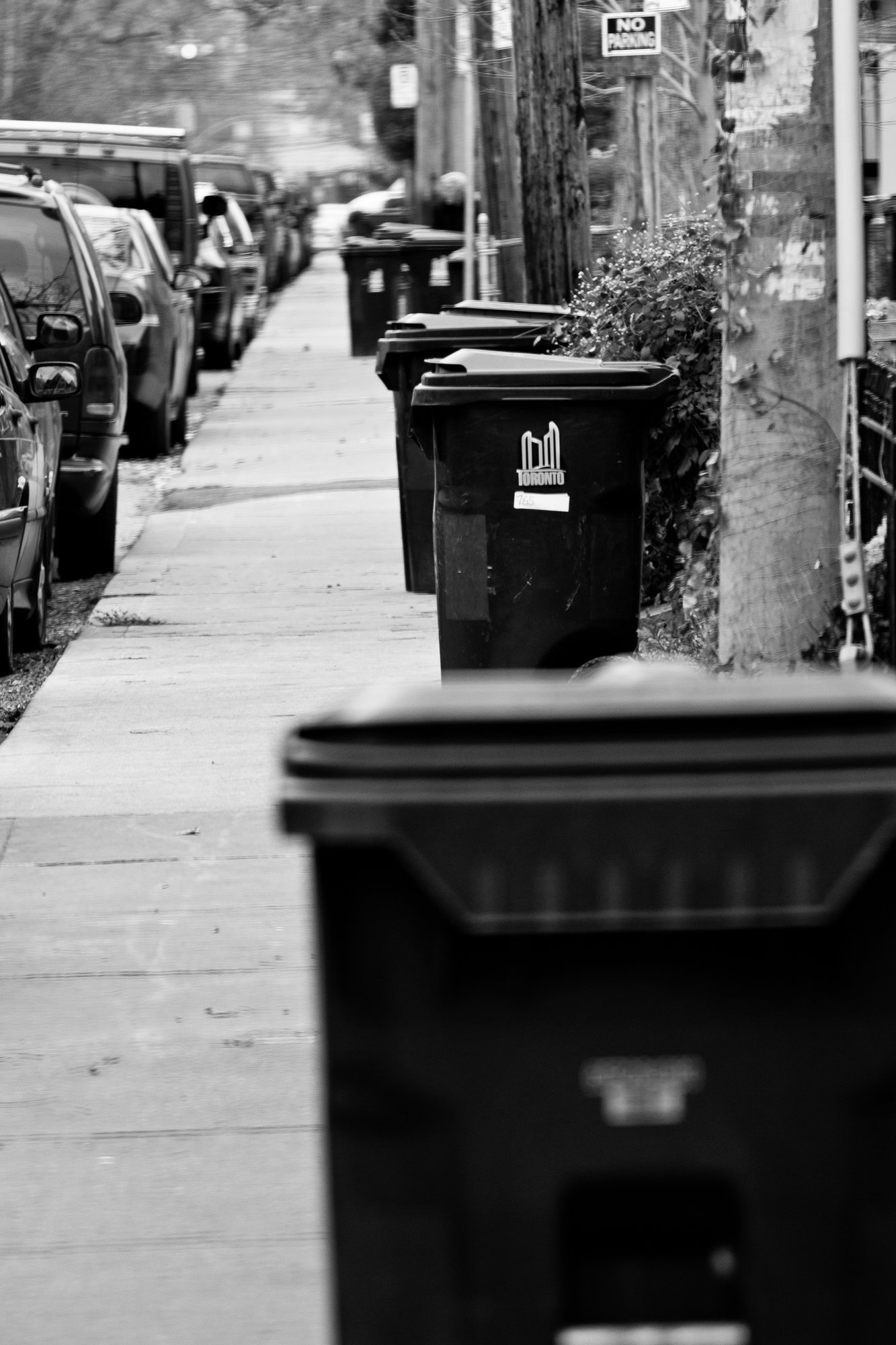
For detached houses in Toronto (City of Toronto), the collection rhythm is: the Green Bin food scraps are collected every week, while general garbage and recycling alternate every other week—one week is “garbage + food scraps,” the next is “recycling + food scraps,” with food scraps fixed every week. There’s an important change for 2026 to flag in particular: starting January 1, 2026, the City of Toronto is no longer responsible for collecting residential recycling (blue box), with the producer responsibility organization Circular Materials taking over; for issues such as missed pickups or blue box service, you need to contact Circular Materials (phone 1-888-921-2686) rather than calling the city, and newcomers who go by old information can easily contact the wrong unit. Large items (sofas, mattresses, furniture) are relatively friendly in Toronto: if it’s a collectible oversized item and it’s your garbage day, you can usually just place it beside the garbage bin, not necessarily needing to book in advance, and sofas, mattresses, and furniture do not need to be disassembled; carpets need to be rolled up and tied, with each roll not exceeding 20 kilograms and a length within 1.2 meters (about 4 feet). For exact details and your collection day, it’s recommended to confirm using the city’s Waste Collection Schedule and Oversized & Metal Items pages.
Calgary uses a three-wheeled-cart system, and the biggest difference from the first two cities is that collection requires a monthly fee, usually rolled into the utility bill (ENMAX utility bill). The collection frequency of the three carts and the announced 2026 monthly fees are in the table below.
| Cart type | Collection frequency | 2026 announced monthly fee (per month) |
|---|---|---|
| Blue Cart (recycling) | Every week | About CA$2.17 |
| Black Cart (general garbage) | Once every two weeks | About CA$7.71 |
| Green Cart (food scraps + yard) | Weekly from April to October, every two weeks from November to March | About CA$10.63 |
The three monthly fees in the table above total about CA$20.51; the rates are the officially announced amounts and may be adjusted year by year, so before paying defer to the city or your bill. A few details that can easily get you ticketed: the garbage cart must be dragged to the designated spot before 7 a.m. on collection day, and cannot be dragged out earlier than 7 p.m. the day before; the Black Cart and Green Cart each have a weight cap of about 60 kilograms. When the Black Cart can’t hold it all, Calgary has a “garbage tag” system—first fill the Black Cart, then put the extra garbage into tied bags, attach a garbage tag, and place them about 0.5 meters (2 feet) away from the Black Cart, with each bag not exceeding 20 kilograms. For official lookups, see City of Calgary — pickup schedule and Black Cart garbage collection.
The two situations that most often happen right after moving are forgetting to drag the bin out, and not knowing where to dump a pile of old furniture when moving. When you miss the collection day, the most practical approach is to temporarily store the garbage bag indoors or in the garage and wait for the next collection day; never, for convenience, pile it up at the curb or in front of someone else’s house, as this is a violation in most cities; for a small amount of excess general garbage, some cities (such as Vancouver) allow attaching an extra garbage sticker, and Calgary can handle it with a garbage tag. As for large items such as sofas and mattresses, you cannot just put them next to the general garbage bin and expect them to be taken away: Toronto is more friendly about placing compliant large items beside the bin on garbage day, while cities like Vancouver mostly require booking a separate special collection (which can be done through 3-1-1 or the VanCollect App); the rules vary greatly from city to city, so before dumping, first check the local city’s “bulky item / large item” page, or just call the city directly to ask.
Which step should you sort out first after actually settling in? First confirm whether you live in an apartment or a detached house. If you live in an apartment, ask the property: how the garbage room is sorted and what the cutoff time is; if you live in a detached house, go to the website of the municipality where you live, look up your weekly collection day by address, set up a reminder app like VanCollect, and then label the bins at home against the local sorting guide. Get these two things done in the first week of moving, and you won’t go wrong much afterward.
One last honest word: what this article gives you is a comparison of three cities and directions for verification; collection days, fees, and recycling contractors all change—especially major shifts like Toronto’s 2026 recycling overhaul—so before you actually take action, be sure to go back to the official page of the municipality where you live and confirm once more. If you’d like to sort out the other parts of settling-in life together, you can go on to read the Canada Life Guide we’ve put together.
Leave a Reply