
Updated and fact-checked: 2026-09-22
The 2026 World Cup has ended. This page preserves the rules used for Canadian tournament matches as a reference for ticket disputes, travel records and historical research; it is not the current policy of BC Place, Toronto Stadium or a future event. FIFA’s Stadium Code of Conduct took effect on June 2, 2026 and took precedence over similar ordinary venue rules while a World Cup ticket or accreditation was required. FIFA’s post-tournament ticketing page now also says that this information applied during the completed tournament. FIFA Stadium Code of Conduct, FIFA post-tournament ticketing notice.
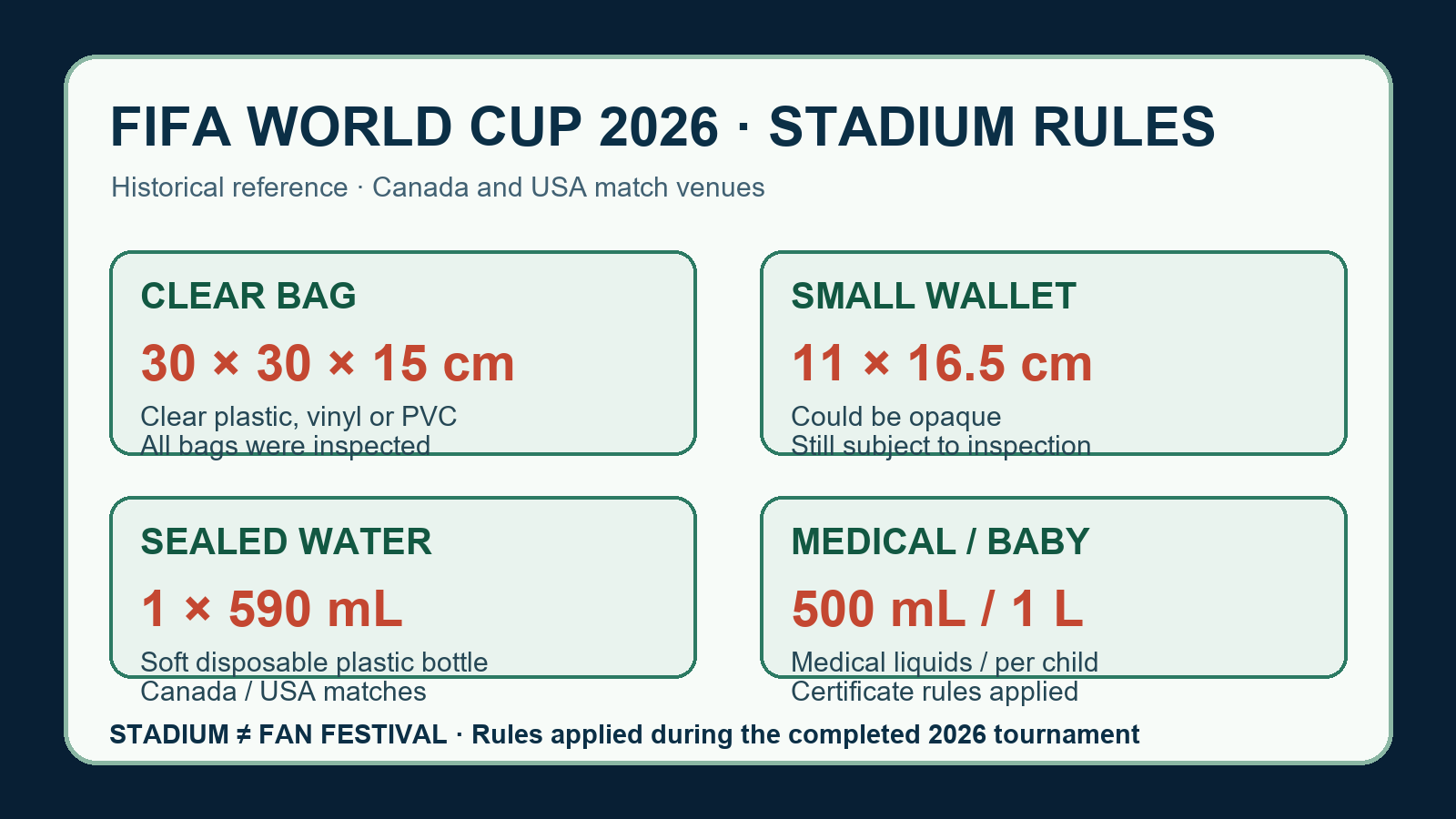
How the 2026 stadium screening rules treated bags, water and food
Canada and United States match venues used a clear-bag policy. A bag had to be clear plastic, vinyl or PVC and no larger than 30 × 30 × 15 cm. One opaque clutch or wallet was also allowed, but it could not exceed 11 × 16.5 cm. Every bag remained subject to inspection. This was the FIFA World Cup stadium standard, so an ordinary BC Place event policy could not replace it. FIFA Code section 2.5, Vancouver host stadium guidance.
| Item | 2026 FIFA stadium rule | Boundary |
|---|---|---|
| Clear bag | Clear plastic, vinyl or PVC; maximum 30 × 30 × 15 cm | Every bag was still inspected |
| Small clutch / wallet | Could be opaque; maximum 11 × 16.5 cm | This was not a large-backpack exception |
| Drinking water at Canada / US matches | One soft plastic, factory-sealed disposable bottle per person; maximum 590 mL | Hard-sided and reusable bottles were outside this exception |
| Other liquids / hand sanitizer | Other liquids over 100 mL were prohibited; hand-sanitizer container maximum 100 mL | Inside purchases and medical / infant exceptions were separate |
| Ordinary outside food | Generally prohibited; food acquired inside was allowed | Medical and baby / young-infant food had exceptions |
| Alcohol | Could not be brought in; purchase and consumption were limited to designated areas and event rules | Inside sales did not mean outside alcohol was allowed |
FIFA’s Fan Safety page separately allowed each fan at a Canada or United States match to bring one factory-sealed, soft, disposable plastic water bottle up to 590 mL; hard-sided and reusable bottles were outside that allowance. The full Code also prohibited ordinary liquids over 100 mL, capped a hand-sanitizer container at 100 mL and generally limited food to items acquired inside. Those provisions must be read with the medical and infant exceptions. They cannot be reduced to either “all snacks were allowed” or “all food was forbidden.” FIFA Fan Safety, FIFA Code sections 3.1.20–3.1.22.
Medical, infant and accessibility exceptions, and the separate festival scope
Baby milk and sterilized water could total up to 1 L per child. Medically required liquid could be up to 500 mL. Medical liquids and medical food required a medical certificate in English, French or Spanish, and the person for whom they were intended had to be present; permitted food could not use a glass container. Service animals were exempt from the general animal prohibition. Accessibility Ticket holders could use manual or electric wheelchairs and three- or four-wheel mobility scooters inside; some stadiums could require a person to bring their own device. Entry points varied by ticket type, accessibility need and day-of directions, so no entrance could be promised for everyone. FIFA Code sections 3.1.19–3.3, Vancouver entry guidance.
A stadium, Toronto Fan Festival and Vancouver Fan Festival were separate sites. Toronto directed stadium ticket holders to the FIFA app or website while sending festival attendees to a different city entry guide; one set of rules could not be transferred to the other. City of Toronto tournament readiness notice. Vancouver’s festival rules, for example, allowed one empty, non-glass and non-metal refillable bottle up to 1 L and used its own bag, food and screening list. That did not change the stadium’s 590 mL factory-sealed-bottle rule. Vancouver Fan Festival entry information.
Weapons, explosives, tools, spray cans, selfie sticks, drones and professional recording equipment were among the common high-risk prohibited items, but this article does not reproduce the 35-page list. The Code allowed one personal power bank no larger than 12 × 17 cm per person. Wi-Fi, charging and storage were venue- or event-specific services, so they are not promised here. For an event taking place now, reopen the organizer’s and venue’s current pages rather than relying on this historical 2026 record. Our World Cup information centre links to other verified tournament history.