
Updated: 2026-06-17|Ticket prices, shuttles, and road closures are subject to official announcements
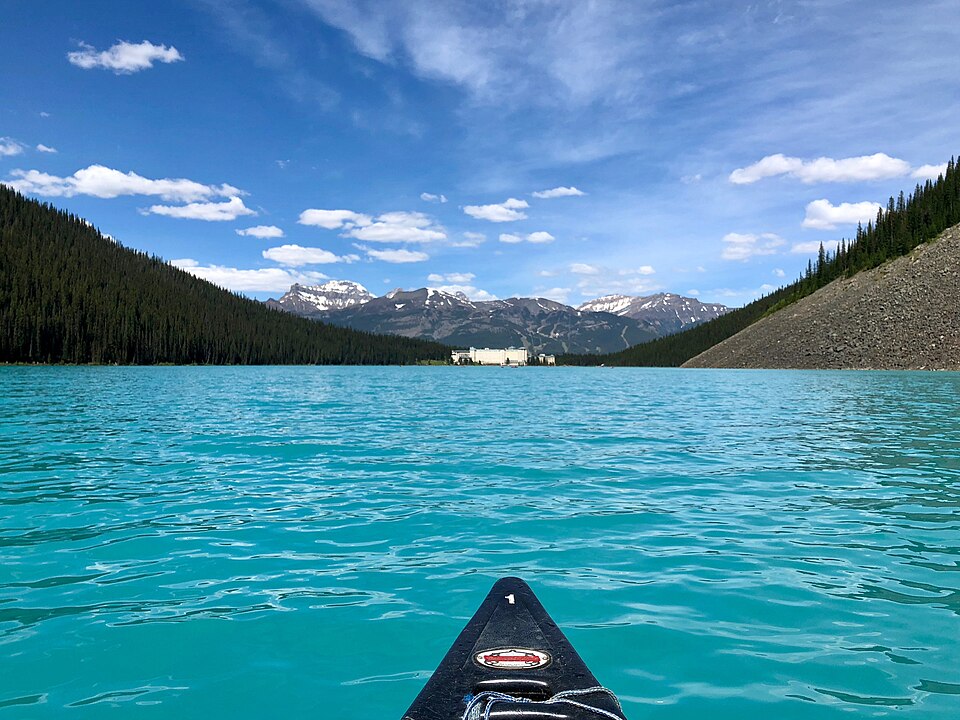
If you could only visit one place in Canada, many people’s answer would be Lake Louise. That turquoise colour isn’t photoshopped, it’s real — it’s called “glacial flour,” rock that glaciers have ground into powder and that floats suspended in the water, refracting sunlight into that unbelievable colour. The key point is that this colour isn’t there all year round: the water only takes on its deepest turquoise once the ice and snow have fully melted, with the most saturated colour roughly from late June through September; in May and October the colour is paler, and in winter the lake freezes over completely and turns white. So choosing the right time is the most crucial step of this trip.
Lake Louise is located in Banff National Park in the province of Alberta, about 57 km from the town of Banff and about a 2-hour drive from Calgary airport. Lake Louise Village is a very small service settlement with only a few restaurants and shops; the actual lake is about 4 km further up the road from the village. Moraine Lake is about another 12 km up into the mountains from Lake Louise Village, and the two lakes are usually scheduled for the same day. For how to approach the Banff area overall, see our complete guide to Banff National Park.
As for which month is the most beautiful, I’ve put together a table for you to compare:
| Month | Lake condition | Notes |
|---|---|---|
| January–April | Frozen over | The lake is frozen, but there’s the ice castle and skiing; winter has a unique beauty |
| Late May–early June | Just thawed | Ice and snow are melting, the water starts turning blue, and there are fewer visitors |
| June–September | Bluest and most beautiful | The period of most saturated colour; around the summer solstice there are up to 17 hours of daylight |
| Early October | Autumn colours | The larches turning golden have their own charm, but the water colour starts to fade |
| After late October | About to freeze | There’s already early snow around the lake, and it freezes over a few weeks later |
Many people ask which is more beautiful, Lake Louise or Moraine Lake. Honestly, each has its strengths. Lake Louise has Victoria Glacier behind it, majestic and imposing, and the Fairmont Château Lake Louise castle hotel sits right on the shore; the views are complete, transport is more convenient with reasonable parking facilities, the hiking trails are more varied (Plain of Six Glaciers, Big Beehive), and in winter there’s even a ski resort and an ice castle. Moraine Lake, on the other hand, has the Valley of Ten Peaks behind it, with richer layers in the composition; it once appeared on the Canadian $20 bill and is extremely famous, the water colour is sometimes even deeper, and it’s smaller than Lake Louise yet more exquisite. If you really had to pick just one, more people choose Moraine Lake — but its access restrictions also make it harder to reach. My advice is to visit both; they can be done on the same day: get up early and hit Moraine Lake first, then head back to Lake Louise in the afternoon.
When it comes to getting to Moraine Lake, this is the easiest place to get tripped up in 2026, so be sure to read carefully: Since 2023, Parks Canada has banned private vehicles from the Moraine Lake road year-round; this is not a peak-season restriction but a standing policy. In other words, the old method of “driving up yourself at 5:30 a.m. to grab a roadside parking spot” no longer works at all — the access point is directly controlled and self-drive vehicles are not allowed up the mountain. To get to Moraine Lake now, there are only a few legal ways: take the official Parks Canada shuttle bus, take the connecting Roam Transit Super Pass shuttle, join a licensed commercial tour (bus or taxi), or cycle up; the only exception is guests staying at Moraine Lake Lodge.
The way to book the official shuttle is to go to reservation.pc.gc.ca and grab a “Moraine Lake” shuttle ticket. The 2026 road-open season runs from June 1 to October 12 (weather permitting), with ticket prices of about $12.75 CAD round trip for adults, $6 for seniors, and $4 for children under 17; ticket holders can park for free at the Lake Louise shuttle parking lot. Tickets are released in two waves: on the on-sale date (8 a.m. MT on April 15, 2026) about 40% of the spots are released first, and the remaining 60% are released at 8 a.m. MDT two days before departure — so even if you don’t get one in the first wave, don’t give up; you can try again 48 hours before departure. There’s also the early-morning Alpine Start Shuttle, running one departure each at 4 a.m. and 5 a.m. daily from June 1 to October 12, going from Lake Louise Lakeshore to Moraine Lake; this is now the only legal “early” option for those wanting to shoot the sunrise. If you’d rather not drive at all, the whole car-free approach can be planned around public transit.
Back to Lake Louise itself. Canoeing on the lake is a classic experience; the Fairmont boathouse rents canoes for about $140 CAD/hour (2-person canoe), and looking back from the middle of the lake at the castle hotel and Victoria Glacier is a stunning sight; in peak season be mentally prepared to queue, usually waiting 30–60 minutes or more. Hiking is the main event here.
Lake Louise hiking trails
| Trail | Distance | Difficulty | Highlights |
|---|---|---|---|
| Lakeshore Trail | 4km round trip | Easy | A lakeside walk, the most relaxed |
| Lake Agnes Teahouse | 7.4km round trip | Moderate | A teahouse above a small lake, with light refreshments available |
| Plain of Six Glaciers | 9.6km round trip | Moderate | Gradually heading deep into the glacier area; the teahouse serves meals (confirm opening in advance) |
| Big Beehive | 13km round trip | Hard | A viewpoint above Lake Agnes, overlooking Lake Louise |
Winter experiences
Lake Louise in winter is an entirely different sight. Lake Louise Ski Resort is the largest ski resort in Alberta, with 4 mountain peaks and 162 runs; lift tickets are about $100–200/day (cheaper if bought online in advance), the terrain is varied, and it’s well suited for beginners to get started too. The Ice Castle is built next to the Fairmont hotel every January, with admission of about $30–40 CAD; lit up at night it’s especially beautiful. Once the lake freezes over you can also skate directly on Lake Louise (free), and the Fairmont rents skates.
As for lodging, options at Lake Louise are limited and in high demand during peak season, so it’s advisable to book as early as possible. Here are a few common choices:
| Lodging | Location | Price range | Features |
|---|---|---|---|
| Fairmont Château Lake Louise | Right on the lakeshore | $600–1,200/night | Open the window when you wake up and Lake Louise is right there — a once-in-a-lifetime experience |
| Deer Lodge | 5-minute walk from the lakeshore | $220–400/night | Century-old log-cabin style, much more affordable than the Fairmont |
| Lake Louise Inn | Lake Louise Village | $180–350/night | A moderate location with relatively good value for money |
| Paradise Lodge & Bungalows | Near the lake | $250–450/night | Standalone cabins with kitchens, suitable for families |
As for how much the whole trip costs, take 2 people for 2 nights to get a rough idea: lodging (2 nights at Lake Louise Inn) about $700–800; national park admission (2 people × 2 days) about $45 — if you go often, consider the Discovery Pass annual pass at about $75.25/person; the Moraine Lake shuttle (2 people round trip) about $26; canoeing for 1 hour $140; food (2 people for 2 days) about $200–300. Altogether it comes to roughly $1,200–1,500 CAD; the actual amount will fluctuate with the season and exchange rate, so go by the current official and booking quotes. If you want to extend the trip further north, you can go on to read the guide to Jasper National Park and the Rocky Mountains road-trip guide.
?️ Getting to Lake Louise: Lodging & Flights
Lake Louise is one of the most famous attractions in the Rocky Mountains, with limited lodging options that are in tight supply during peak season. Below is a quick booking gateway via Trip.com.
? Lake Louise & Banff lodging
Lodging near Lake Louise is dominated by the Fairmont Château hotel and the Lake Louise Inn; if you’re on a tight budget you can stay in the town of Banff (60 km) and drive over yourself.
✈️ Flights to Calgary
Calgary airport (YYC) is the nearest airport; after arriving, renting a car and driving about 2 hours gets you to Lake Louise.
* The above are Trip.com affiliate promotional links; clicking them does not affect the price.
This page may contain affiliate links. If you book activities through these links, Let’s Canada may earn a small commission at no extra cost to you.
Leave a Reply