
Content updated October 11, 2026.
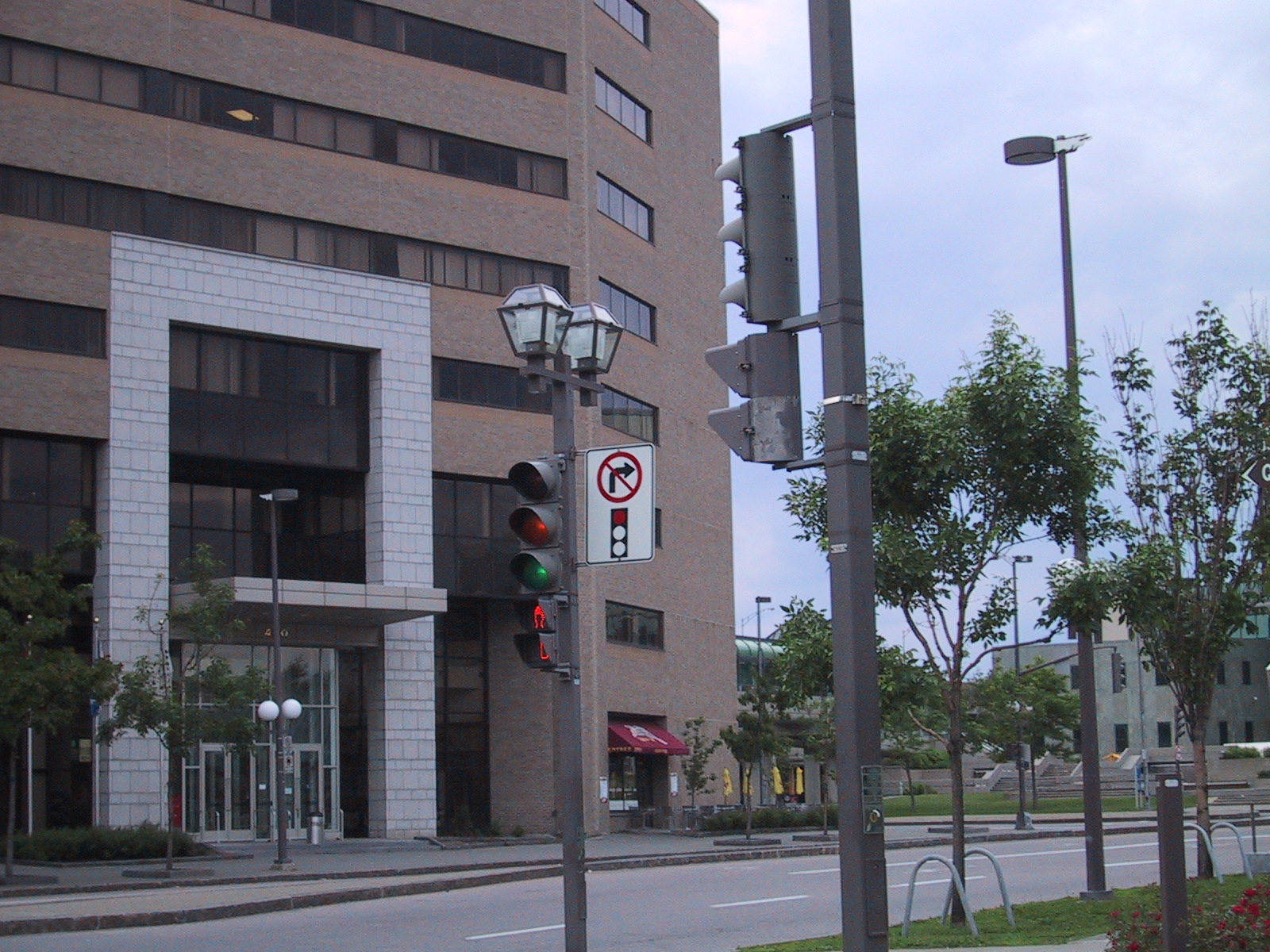

Before driving a passenger vehicle in British Columbia, Ontario, Alberta or Quebec, distinguish your licence stage from the purpose of your stay: a visit, a move or your first licence application. These determine how long you may use an outside licence and which tests and electronic-device restrictions apply. A licence label or penalty from one province cannot simply be transferred to another. Turning right on red also depends on the signal, posted restrictions and who has the right of way.
BC’s current beginner pathway starts with an L learner’s licence and at least one year of supervised practice before the Class 7 road test for an N licence. Under ICBC’s current graduated licensing rules, the N stage normally requires at least 24 months of safe driving; qualifying training during the L stage and a safe record can reduce that to 18 months. A Class 5 road test follows. These are eligibility periods, not a promise that everyone will complete the process within the same number of days.
BC’s next effective date needs separate attention. ICBC’s announced changes take effect October 19, 2026: eligible N drivers will use a Driving Record Assessment instead of a second road test, move to a restricted Class 5 licence and then complete a 12-month restriction period. Drivers under 25 need 24 months of safe driving, reducible to 18 with qualifying training; those aged 25 or older need 12 months. Conditions include no convictions for excessive speeding or using an electronic device while driving, and no driving prohibitions or suspensions. At this article’s review date, the changes are not yet in force. This is neither a universal test exemption nor an immediate unrestricted licence.
Ontario’s beginner stages are G1, G2 and G. Ontario’s licensing rules normally require 12 months with a G1 before the first road test, reduced to eight months after an approved driver education course, followed by 12 months with a G2 before the G road test. The graduated process generally must be completed within five years; that rule belongs to Ontario, not Alberta. Passenger-age, supervision, alcohol and night-driving restrictions must be checked for the actual licence stage.
In Alberta, a Class 7 learner’s licence is available from age 14. A Class 5 GDL applicant must be at least 16, have held Class 7 for at least 12 months and pass a road test. Leaving the probationary stage requires age 18 or older, 24 months of probation and no suspensions or demerit points during the final 12 months. Approved training can reduce probation by up to six months. Alberta’s official steps state that the advanced road test has not been required to leave GDL since April 1, 2023. Being under 18 does not create a universal 24-month Class 7 learner requirement.
Quebec has a separate Class 5 learner stage. SAAQ’s first-licence guidance requires a learner’s licence for 12 months, the driving course, knowledge and road tests, then a probationary licence for 24 months. This describes a first-licence pathway. New residents with an outside licence must check the separate exchange process.
BC, Ontario and Alberta allow a right turn on red after a complete stop when no sign prohibits it, subject to yielding to traffic and pedestrians with priority. BC’s basis is section 129 of the Motor Vehicle Act; Ontario’s handbook also requires signalling and checking that the way is clear; Alberta’s intersection rules require stopping and yielding. Permission to turn does not permit rolling through the stop line.
Quebec generally permits right turns on red, except throughout the island of Montreal and at intersections with a prohibition sign. The exception is neither province-wide nor limited to downtown. Quebec’s rules require stopping before the stop line or crosswalk, yielding to other road users entering or about to enter the intersection, and checking for pedestrians and cyclists on the right. Turning is optional: pressure from a driver behind does not make an unsafe or prohibited turn lawful.
Distracted-driving rules require more than a fine comparison. ICBC lists CAD 368 and four penalty points per distracted-driving ticket; accumulated records can also affect additional insurance premiums. A red light or traffic queue does not permit phone use. L and N drivers are also prohibited from using hands-free electronic devices. Alberta lists CAD 390 and three demerit points, with restrictions on handheld phones and manually entering navigation information applying while stopped at a red light too. BC’s novice hands-free rule must not be assumed to apply to every licence in every province.
Ontario’s distracted-driving penalties depend on licence class and previous convictions. For A to G and M licences, a first conviction carries CAD 615 if settled out of court, including the victim surcharge and court fee, or up to CAD 1,000 after a summons or an unsuccessful court challenge, plus three demerit points and a three-day suspension. G1, G2, M1 and M2 novice drivers face the same fines but a different suspension and point system: the first suspension is 30 days, without demerit points. Quebec’s government road-information service also explicitly prohibits handheld phone use while driving. Check conditions and set navigation before departure or after safely parking.
School-bus stopping distances cannot be reduced to one Canadian rule. Ontario’s handbook requires stopping when a bus’s red lights flash or its stop arm is activated, at least 20 metres away when approaching from behind. On roads with a median, it distinguishes traffic behind the bus from traffic travelling in the opposite direction. Quebec’s guidance specifies a distance greater than five metres and conditions involving a median or another raised divider. Each distance applies in its own jurisdiction. Check the lights, stop arm and road arrangement together.
After moving to BC, you normally have 90 days to exchange your licence. ICBC’s exchange rules separately list exceptions for visitors, qualifying full-time students, people ordinarily resident elsewhere and the Seasonal Agricultural Worker Program. Test exemptions, licence class and recognition of driving experience depend on the issuing jurisdiction and acceptable evidence. A visitor’s permission period is not a new resident’s exchange deadline.
Ontario gives new residents 60 days to use a valid outside licence. Its exchange rules list Taiwan as a reciprocal jurisdiction, but learner licences cannot be exchanged and Taiwan is excluded from motorcycle-licence exchange. Since July 1, 2026, experience from non-reciprocal jurisdictions is credited for at most one year; the old claim that two years of experience allows direct testing for a full G must not be carried forward. Original licensing and experience documents, with English or French evidence, affect the process. G and M applicants must also declare Ontario as their primary residence and legal presence in Canada.
After permanently settling in Alberta and becoming a provincial resident, the exchange deadline is 90 days. Provincial residency is not limited to Canadian permanent-resident immigration status. Alberta’s exchange document lists reciprocal Class 5 exchange for Taiwan; a full Class 5 also requires proof of at least two years of driving experience. Non-reciprocal jurisdictions have separate Class 7 knowledge-test, Class 5 road-test and experience-review requirements. Temporary visitors follow different rules; a trip out of the province does not restart a new resident’s 90 days.
For newcomers settling in Quebec, the government’s settlement guide describes six months of foreign-licence use after arrival, followed by obtaining a Quebec licence. Exchange agreements, tests and documents depend on the issuing jurisdiction and individual circumstances. This is not a blanket statement for all tourists or students, or a promise of a test-free exchange. Ontario visitors separately need to check the licence and international driving permit conditions for stays of less than or more than three months.
For parking, check the destination’s signs, hours and local rules: a usable licence does not authorize parking anywhere. Rental contracts also have their own age, document and insurance requirements, separate from provincial licence-exchange deadlines. Our Canadian traffic rules guide is a planning starting point. Decisions at a particular intersection or parking space still depend on the province, municipality and posted signs.