
This page may contain affiliate links. If you purchase or book through these links, Let’s Canada may earn a commission at no extra cost to you.
Updated: 2026-06-17 | Real-time information such as ticket prices, schedules, and policies should be confirmed against official announcements.
In two days in Toronto, the most common pitfall I’ve seen is treating the trip as a “sightseeing checklist,” and then spending the whole day changing vehicles, lining up, and rushing to the next stop. In fact, the prime areas of downtown are within walking distance of each other; rather than cramming everything in, it’s better to leave the first day for the lakeshore and landmarks, give the second day to museums and neighbourhoods, and keep a stretch of flexible time in between where you can sit down for a coffee and adapt to the weather as it comes. This rhythm is arranged on the principle of “fewer area changes, more walking.”
It’s best suited to travellers visiting Toronto for the first time and staying only one to two nights, or to people who are treating Toronto as one stop on a Canada itinerary. If you’re coming for Niagara Falls, two days is actually very tight—the round-trip travel time plus the falls themselves take the better part of a day, and forcing them in will leave the city centre as nothing more than a quick once-over; the falls are better left for an itinerary of three days or more. Conversely, if you enjoy slowly wandering neighbourhoods, going into museums, and daydreaming by the lake, two days is just right.
First, get the transit sorted. Public transit in downtown Toronto is handled entirely by the TTC (subway, streetcars, buses), and for tourists there’s almost no need to rent a car or call a ride. Here are a few key points from practical use:
| Item | Details | Tips for tourists |
|---|---|---|
| Adult single fare | About CA$3.30 with a PRESTO card; about CA$3.35 with a contactless credit card / PRESTO ticket | A contactless credit card can be tapped directly at the gate, so there’s no need to buy a separate card |
| Transfers | With PRESTO or contactless payment, enjoy free transfers within 2 hours | Paying cash does not qualify for the transfer benefit |
| Day Pass | About CA$13.50, unlimited rides that day | It pays off once you take more than four rides in a day, ideal for a packed day of sightseeing |
Fares and rules are still subject to official announcements; before you set off, it’s best to confirm once more on the TTC website. Starting in 2026, Toronto has been gradually adjusting its fare system, and among other changes the “monthly fare cap” mechanism will take effect on September 1, 2026 (within the same calendar month, rides are free after 47 paid rides); the details may still change. The simple principle: on the first day, with attractions concentrated and walking as the main mode, just buy single fares; on the second day, if you’ll be going back and forth between museums, markets, and neighbourhoods, a day pass is the most reassuring choice.
Day 1: Downtown landmarks + the lakeshore
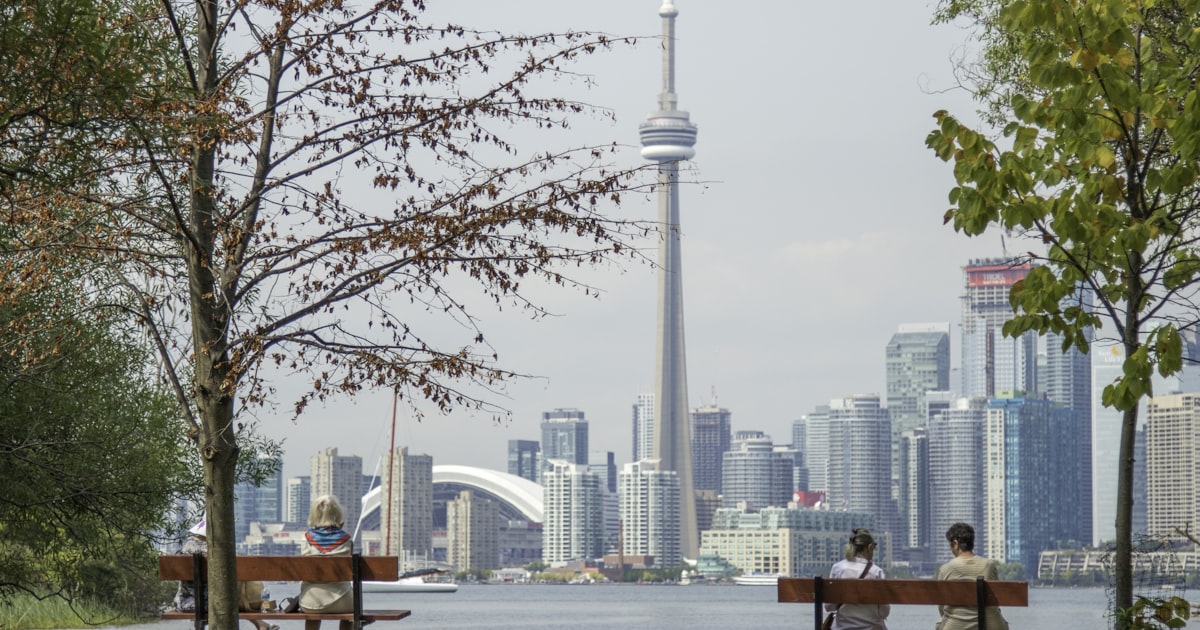
The main theme of the first day is getting to know the city and seeing the water. In the morning, set out from downtown and first head to the CN Tower for a view of the whole city—this is Toronto’s most classic opening, and on a clear day the observation deck lets you see the islands across the lake, and even farther in the direction of Niagara. CN Tower tickets are split into different levels: general observation, plus the higher SkyPod, and the outdoor EdgeWalk, with quite a price gap between them, and quotes on third-party platforms and the official site often differ; it’s best to go straight to cntower.ca, which corresponds to the official ticketing page, to confirm the day’s ticket types and prices, and to book online as much as possible to avoid the lines.
Right next to the CN Tower is Ripley’s Aquarium, a great next stop for families with children; if you’re not in a hurry, walk south to Harbourfront for a stroll, watching the boats along the shore of Lake Ontario and having lunch—this is the most comfortable rhythm in this area. In the afternoon, if you still have the energy, you can take the ferry from Harbourfront to the Toronto Islands; the islands have no cars, with beaches and grassy fields, and the angle looking back at the city skyline is the best there is. Ferry schedules and fares vary by season, and summer weekends draw big crowds, so it’s best to check the official ferry times in advance and arrive early to line up at the dock. In the evening, head back to the city, where the Entertainment District area has plenty of restaurant choices, a good way to wrap up.
For accommodation, staying in Downtown, around Union Station, or along the subway line saves the most time, as the first day’s attractions are almost all within walking distance. If you’re on a tight budget, staying along subway Line 1 or Line 2 and then taking public transit into the city is also very convenient.
Day 2: Museum culture route + local neighbourhoods
The second day follows an “indoor culture + shopping” route, which holds up even if it rains—a very practical arrangement within a two-day itinerary. In the morning, first pick one of two representative museums: the Royal Ontario Museum (ROM) combines natural history, art, and culture, with a huge collection, and that building, like a cut crystal facet, is itself a landmark; in summer 2026 there are special exhibitions worth noting, such as “Bees: A Story of Survival” (5/16–10/18) and “Psychedelics: Art. Culture. Science.” (6/6–12/6); together with the Canada Strong Pass, from June 19 to September 7, 2026, general admission is free for ages 4 to 17 and half price for ages 18 to 24, making this a great window to go if you’re bringing children or students. The Art Gallery of Ontario (AGO), meanwhile, focuses on visual art, with a building by Frank Gehry; people who love painting and contemporary art will prefer it here. Tickets at both museums use “book-ahead-for-a-better-price” dynamic pricing, so for the correct prices and opening hours please refer to each museum’s website for the day’s information, and special exhibitions usually require separate tickets.
In the afternoon, pick one neighbourhood and walk through it; you don’t need to do them all, just pick the one that best matches your travel taste—insisting on covering three districts in half a day brings you back to the old “rushing around” problem. Kensington Market mixes second-hand shops, independent stores, and street food from various countries, with the most casual atmosphere, perfect for eating as you walk; Queen Street West concentrates design boutiques, cafes, and street art, and along the way you can duck into the nearby Graffiti Alley for photos; Distillery District, with its cobblestone streets and red-brick old buildings converted into restaurants and galleries, has a lovely atmosphere in the evening light, making it a great place to wrap up the day and have dinner.
When budgeting, note that the easiest thing to overspend on in Toronto city travel isn’t tickets but accommodation and dining, plus that in Canada tax and tips are generally added (restaurants typically start at 15%); it’s best to budget accommodation, transit, tickets, dining, tax and tips, and a contingency fund separately, rather than looking only at the ticket price of a single attraction. In terms of rhythm, keeping a stretch of unscheduled flexible time each day is closer to the real travel experience than cramming in all the attractions. Toronto summers have long daylight and lots of activities, but the weather can also change in an instant, so think out your indoor backups (museums, markets, shopping malls) ahead of time, and you won’t be caught off guard on a rainy day.
People often ask whether you can also fit in Niagara Falls in two days, and my answer is that it’s not really recommended: a round trip to the falls plus touring takes at least the better part of a day, and forcing it into two days makes the city itinerary very rushed. If you absolutely must go, you could consider dropping the second day’s museums and switching to a full day at the falls instead, and check the round-trip transport and local day-tour times and fares ahead of time; if you want to have both, extending your stay to three or four days will be much more relaxed. To look at Toronto as part of your whole trip, you can also plan it together with the Toronto travel guide and Canada attractions.