
Updated October 8, 2026.
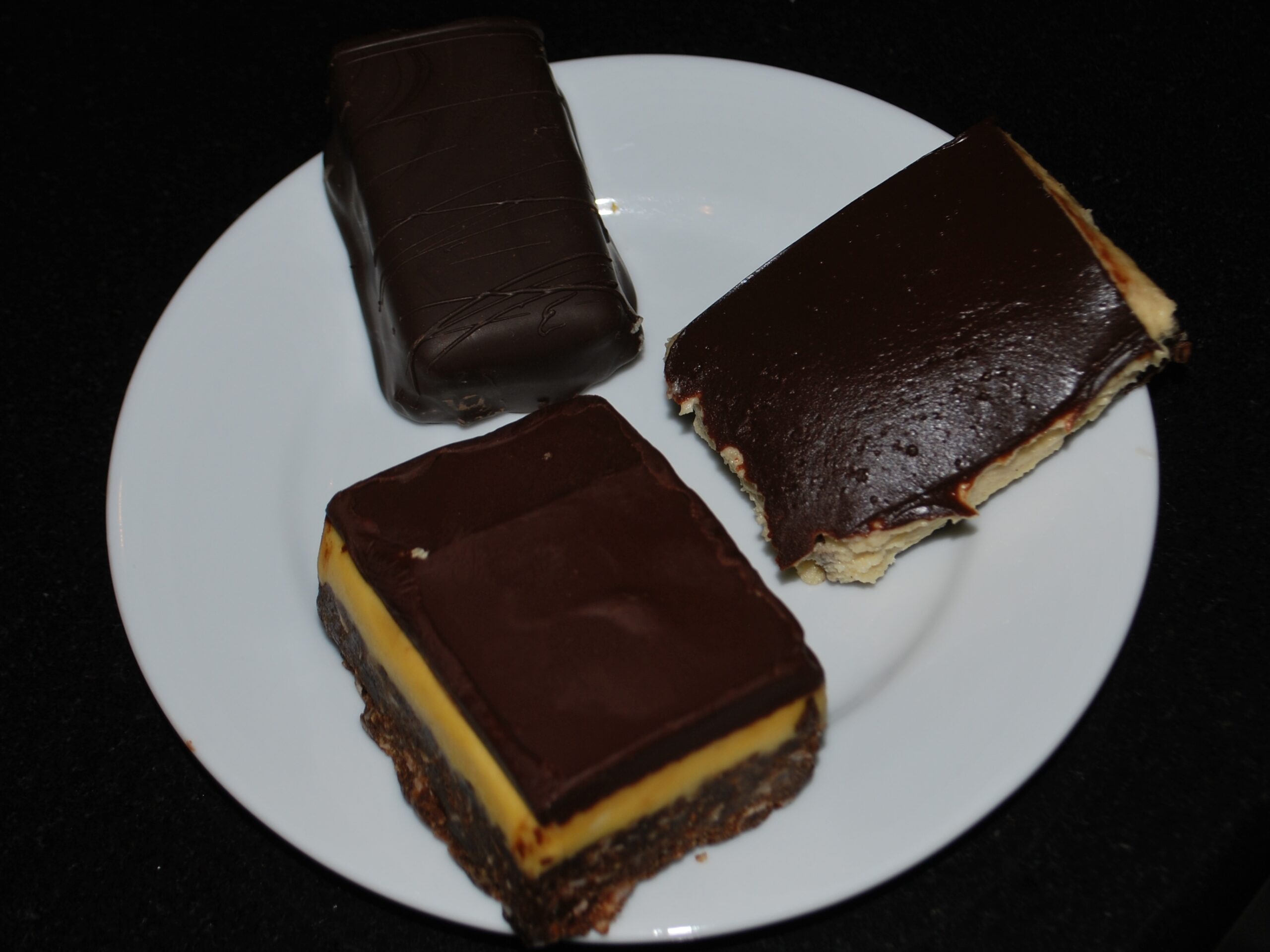

A Nanaimo bar layers a cocoa-and-crumb base, a creamy custard filling and a chocolate topping. The City of Nanaimo’s recipe is a useful starting point for the classic version; other variations may use different ingredients. Try a small portion or share one if you want to explore the flavour. That is a tasting suggestion, not a claim about every Canadian’s preferences or a personal trip we have not documented.
Published history does not establish a sole inventor. The City’s 2025 proclamation records a Chocolate Square recipe in the hospital auxiliary’s 1952 cookbook and the Nanaimo Bar name in Edith Adams’ 1953 cookbook. Treat that as the municipality’s account of publication history. The City also records a 1986 recipe contest, organised with Harbour Park Mall and won by Joyce Hardcastle. The contest date is separate from the dessert’s earliest appearance.
No-bake does not mean no heat. The official recipe uses a double boiler for the base and cooks the added egg while stirring; the chocolate topping is also melted over low heat before chilling. Do not reduce that method to mixing in a raw egg and eating it. Consult the original for proportions and order; this guide does not invent a cooking temperature or shelf life.
Check the actual recipe and product label for dietary restrictions. The municipal version includes egg, butter, cream, almonds and wafer crumbs. A vegan or gluten-free option elsewhere does not make every Nanaimo bar suitable. Ask about ingredients and shared equipment; a photograph or product name cannot establish allergy safety.
Tourism Nanaimo’s June 2026 Nanaimo Bar Trail is a self-guided tasting resource, not a continuous walking path. Its list spans downtown, northern and southern areas, and Gabriola Island. Narrow your plans by location, then check opening and availability. This guide does not certify every listed business as a recommendation or promise particular flavours, fixed prices or an afternoon that covers the whole list.
Before buying gifts, ask the maker about refrigeration, the labelled expiry and transport outside the fridge. Health Canada’s general food-safety guidance keeps cold food at or below 4°C and refrigerates leftovers within 2 hours, sooner in warm conditions. Those are handling principles, not a shelf-life test for every bar. Vacuum packaging alone does not prove that a product is shelf-stable, and this guide makes no promise about entry into another country.
Keeping a tasting stop within an existing city outing can simplify planning; it is not a transport guarantee. If your trip involves a ferry, our BC Ferries route, terminal and booking guide can help you consider travel alongside chilled storage. For a home version, start with the municipal recipe and work with your actual ingredients and equipment rather than treating this history guide as a guaranteed recipe result.