
Updated and fact-checked: 2026-09-18
There is no single tariff rate that explains how the Canada–US trade dispute affects the economy. As of September 18, 2026, the treatment of a shipment depends on its direction of travel, origin, tariff classification, import date and applicable exceptions. US measures under Sections 232, 301 and 338 have different scopes, while Canada’s new September counter-tariffs cover listed US-origin goods. This article explains the policies and economic evidence; its rate examples are not a calculation of the total duty owed on a particular product. CBP: Section 301, CBP: Section 338, CBSA: Canadian counter-tariffs.
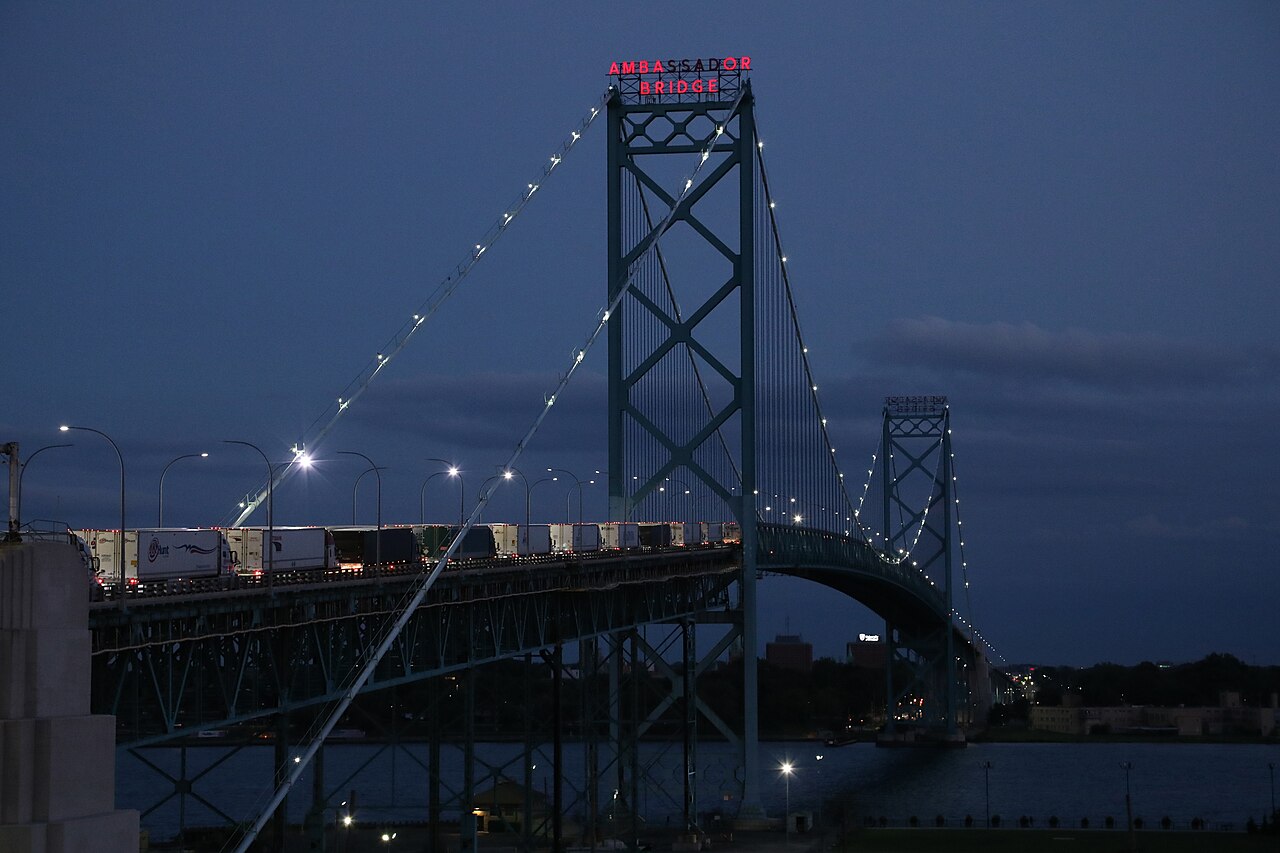

The two directions matter. US import measures on Canadian goods affect the market facing Canadian exporters; Canadian countermeasures on US goods can increase costs for importers in Canada. Whether those costs reach retail prices also depends on businesses absorbing them, alternative suppliers and demand. On September 2, the Bank of Canada said new tariffs would raise costs for some firms and could feed into consumer prices over time. It did not assign every household the same bill. The Bank’s September assessment.
The timeline: court decisions and subsequent measures
Canada’s 2025 counter-tariff lists are not a current tariff schedule. Finance Canada’s archived record describes measures introduced from March 2025 and the removal of most counter-tariffs on September 1 that year, with steel, aluminum and automobile measures retained at that point. This history means neither that all counter-tariffs were removed in 2026 nor that every old list remains in force. Finance Canada’s historical record.
| Date in 2026 | What the documents establish | Scope and limits |
|---|---|---|
| February 20 | The Supreme Court held that IEEPA does not authorize the President to impose tariffs. Judgment | This did not cancel every tariff imposed under other statutes. |
| February 24–July 24 | The 150-day period for the temporary 10% Section 122 surcharge. CBP guidance at the time | Specified exceptions applied; this expired period is not the legal basis for a September tariff. |
| May 7, May 20 and June 11 | The Court of International Trade held the Section 122 measures unlawful, then denied a stay; the Federal Circuit subsequently granted a stay pending appeal. May judgment, Lower-court stay decision, June appellate order | The original relief covered Washington State and two importers. A stay is not a final merits victory and did not revive IEEPA tariff authority. |
| July 1 | The first CUSMA/USMCA joint review meeting ended without unanimous agreement to extend. US statement, Canadian statement | The agreement continued, with annual reviews; it did not automatically expire that day. |
| July 24 | New Section 301 measures began, with a general additional rate of 10% for Canada, subject to exceptions. USTR announcement, CBP conditions | A different measure from Section 122. Canadian goods qualifying and entered duty-free under USMCA have an express exemption. |
| August 22 and September 15 | The 50% Section 338 measure on specified Canadian goods took effect August 22; coverage and exceptions changed September 15. CBP update | Not a 50% tariff on every Canadian product. The Section 301 USMCA exemption cannot simply be carried across. |
| September 8 | Canada imposed counter-tariffs of 15%, 25% or 50% on listed US-origin goods. Order, CBSA guidance | The schedules, origin rules and statutory exceptions determine coverage. |
Court headlines need to be read alongside the remedy. The February Supreme Court case concerned authority under IEEPA. The May Section 122 ruling did not impose a universal injunction for all importers. The June 11 appellate order concerned a stay pending appeal, not a finding that all tariffs were lawful or must all be refunded. These are records of decisions on their stated dates, not a claim that one historical stay order provides the complete September docket status. Supreme Court opinion, Court of International Trade opinion, Copy of the original appellate order.
Section 232 operates through separate industry and product categories. A June 1 metals proclamation changed coverage and treatment from June 8. For example, specified industrial equipment from Canada and Mexico qualifying under USMCA faces 25% on its non-US content, with an effective minimum duty of 15% of the product’s value. That formula does not cover all metal goods. A July 20 primary-aluminum investment program separately provides for half the otherwise applicable rate only for approved companies and authorized quantities, not an automatic halving for all Canadian aluminum. June metals proclamation, July aluminum proclamation.
Nor can the Canadian Section 301 rate of 10% simply be added to every other tariff. CBP lists exemptions for goods entered duty-free under USMCA and specified Section 232 products, among others. Section 338 has its own coverage and exceptions; the availability of some sectoral exceptions changed on September 15. Canadian origin alone therefore does not identify the applicable surcharge. USTR’s stated rationale for its July action is the agency’s finding and policy basis, not this article’s factual judgment on Canada’s entire production system. Section 301 conditions, Section 338 conditions, USTR explanation.
CUSMA is the Canadian name for the agreement called USMCA in the United States and ACEUM in French. Chapter 34 provides for a sixth-anniversary review and extension by unanimous agreement; without unanimous extension, annual reviews take place during the remaining term. The agreement did not automatically expire in July 2026 or automatically extend to 2042. Nor is its original 2036 endpoint an unconditional guarantee: Article 34.6 provides for withdrawal on six months’ notice. Canada’s July statement still identified steel, aluminum, automobiles and lumber as separate negotiating issues. Continued operation of the agreement does not mean all sectoral tariffs have disappeared. Chapter 34, Canada’s review statement.
Canada’s September 8 measures apply rates of 15%, 25% or 50% to the value for duty of listed goods. Finance Canada’s C$27.6 billion figure refers to the value of targeted imports, not tax revenue already collected. CBSA distinguishes US origin from shipment from the United States. Commercial and personal imports can be covered, while qualifying travellers’ exemptions and in-transit exceptions must be considered separately. Where the new order overlaps the Steel Derivative Goods Surtax Order, the two surtaxes are not cumulative; this does not mean no other duties or taxes can apply. Finance Canada’s list and amount, Order and schedules, CBSA application guidance.
Future measures need a separate label. A September 8 US proclamation concerning the dairy dispute schedules an import ban on specified Canadian goods in its annex from September 29. That date had not arrived at this article’s September 18 review. The ban is not on all Canadian goods or all dairy products. The proclamation retains the previous 50% rate for covered goods imported before September 29 but not yet entered for consumption. Such transition rules cannot be dropped simply because a headline omits them. September 8 proclamation, clauses 1–3.
Economic effects: scenarios, forecasts and published data
A scenario asks what might happen under a particular policy path. In its July 2025 escalation scenario, the Bank of Canada estimated that the level of GDP at the end of 2027 would be about 1.25% below its then-current tariff scenario. That is not an observed annual decline, a 1.25% loss in every household’s income, or a direct estimate of damage already sustained in 2026. The comparator, assumptions and horizon are part of the number. The 2025 scenario analysis.
A forecast is another category. In July 2026, the Bank projected GDP growth of 0.7% for that year and 1.8% in both 2027 and 2028. Its tariff assumptions were cut off on July 10, before the subsequent July–September measures. These figures describe the outlook at the time, not finalized annual results or an updated assessment of September’s policy package. July economic outlook, Assumptions and cutoff date.
Actual statistics also require the right units. Statistics Canada’s August 28 release reported that real GDP grew 0.8% quarter over quarter in the second quarter of 2026, seasonally adjusted. The same change expressed at an annualized rate is 3.3%. It is neither 3.3% year-over-year growth nor a 3.3% increase within the quarter. Second-quarter data cannot measure the outcome of measures introduced in September. Positive growth also does not establish that tariffs caused no harm: estimating their effect requires comparison with a credible situation without the measures. Statistics Canada’s second-quarter GDP release.
For households, tracking employment income, imported purchases and housing separately is more useful than assigning everyone a fixed national loss. The Bank’s conditional assessment of cost pass-through does not support the old article’s claim of C$1,700–2,000 lost by every household each year. Spending patterns and employment sectors differ; a GDP scenario percentage cannot be converted into an identical bill for everyone. For a separate look at housing expenses, see our Toronto rent, living costs and tenant protections guide. Its city-specific cost context is not a Canada-wide estimate of tariff losses. The Bank’s assessment of costs and prices.
When reading the next tariff announcement, identify whether it concerns statutory authority, administrative implementation, a court remedy or an economic estimate, then check the goods and dates. A business’s shipment requires assessment of classification, origin documentation and the conditions at importation; household budgeting requires observing actual income and spending. This article does not declare a political winner or turn these data into stock or currency trading advice.