
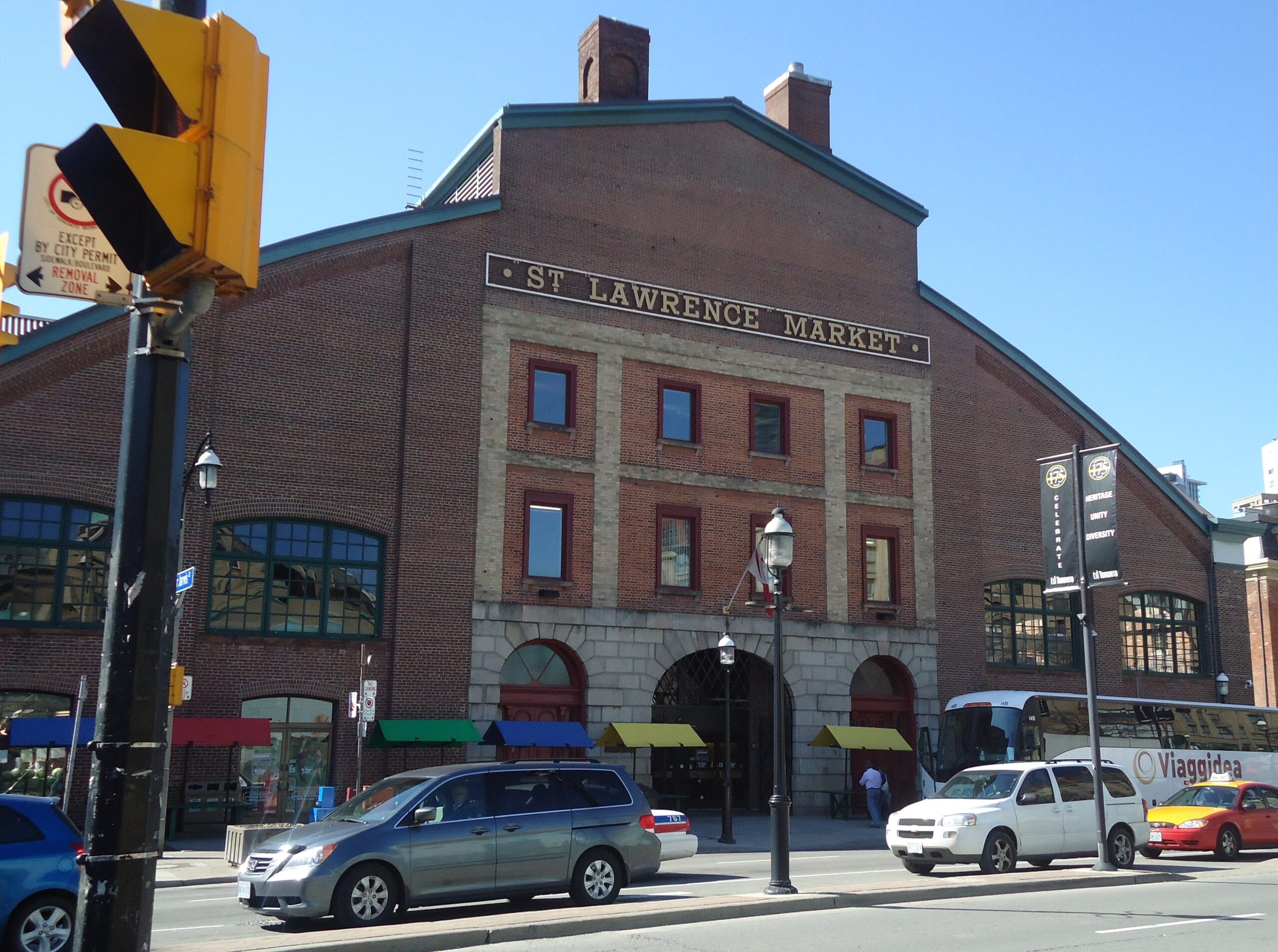
Updated: 2026-06-17 | Opening hours, vendors, and prices are subject to change; please refer to official announcements and on-site signage for actual details.
After spending enough time in Toronto, you come to realise one thing: if you want to taste this city’s most everyday flavours, the supermarket is not the answer—the traditional market is. St. Lawrence Market is exactly that kind of place. It wasn’t created as an Instagram-worthy spot for tourists; it’s where locals come on weekends with their cooler bags to stock up and grab a quick standing breakfast along the way. For anyone visiting Toronto for the first time and looking for a foolproof place to start eating, this is a great way to open the day.
Many people get confused once they arrive, because St. Lawrence Market is actually a market district made up of several buildings—but for a foodie, there are really only two you need to remember. The South Market is the regular main market, where the fishmongers, butchers, cheese shops, bakeries, and deli stalls are all concentrated, and it’s open on weekdays too. The ground floor is fresh produce and ingredients, while the upper level is where the prepared foods and snack vendors gather—over a hundred stalls in all, from seafood and cheese to sandwiches. If you’re looking for something to eat, this is the building where the action is. The North Market (Saturday Farmers Market) is another matter: after the original old building was torn down and rebuilt, a brand-new glass-curtain building reopened only in April 2025, and the farmers market moved back here along with it. The North Market only has activity on weekends—Saturday is the farmers market, where local farmers bring their own products like organic vegetables, maple syrup, and honey to set up stalls; Sunday is the antique market. On weekdays the North Market has no market at all, a point a lot of old sources get wrong, so pay special attention. In other words, on weekdays the building you can browse is the South Market; to experience the bustle of the farmers market, aim for Saturday morning.
Opening hours: be sure to double-check before you go
The thing most likely to leave you stranded at this market is the timing, because the South Market and the North Market are completely out of sync, and the entire South Market is closed all day Monday. Below are the officially announced hours, but it’s still advisable to reconfirm on the official website before setting out, as they change on public holidays:
| Area | Open days | Time |
|---|---|---|
| South Market (main market) | Tuesday to Friday | 9:00–19:00 |
| South Market | Saturday | 7:00–17:00 |
| South Market | Sunday | 10:00–17:00 |
| South Market | Monday | Closed |
| North Market Farmers Market | Saturday | 5:00–15:00 |
| North Market Antique Market | Sunday | Per official announcement |
In practice, the best time is to arrive before nine or ten on Saturday morning: the South Market opens at seven and the North Market farmers market opens at five, so this is when the ingredients are most complete and the crowds haven’t surged in yet, letting you browse at a leisurely pace. By the time afternoon rolls around, the farmers market stalls start to pack up one after another, and the good stuff has mostly been picked over.
If you really had to eat only one thing, it would be the peameal bacon sandwich. This is almost the signature food of St. Lawrence Market—and indeed of all of Toronto. The long-established Carousel Bakery on the market’s upper level is the most famous one; in 2016 their version was chosen by the then-mayor of Toronto, John Tory, as “Toronto’s signature sandwich.” The preparation is simple: a soft French roll stuffed with a thick stack of pan-fried peameal bacon, a really generous portion, with a huge sign hanging above the stall that’s hard to miss on the second floor. If you want to avoid the queue, Paddington’s Pump in the market also sells peameal sandwiches and can serve as a backup. Besides the sandwiches, the South Market’s fishmongers, cheese shops, and bakeries are all worth browsing too; the key is not to buy everything at the very first shop—walk a few more stalls and compare, and you’ll find the one you truly like.
As for cost, St. Lawrence Market is not a cheap market; its positioning leans towards “quality and local,” and each stall’s prices will vary with the season and the item, so the following only gives a general direction—please refer to on-site signage for actual amounts. Prepared foods, sandwiches, and brunch fall into the spending category of a proper meal, not roadside-snack prices, and one portion is filling. The farmers market’s organic ingredients and handmade goods are usually a bit pricier than the regular supermarket, but in return you get the freshness and quality of local small farmers. If you want to save a little, some deli shops have set-meal combos at lunchtime that are better value than ordering à la carte; and during the afternoon hours near closing time at the farmers market, some stalls are also willing to give discounts, because the day’s leftover stock is awkward to carry back. For payment, most stalls accept credit cards and contactless payment, but there are still a few small stalls that prefer cash, so carrying some change on you is the safer bet.
Transport is very convenient; the market is located in the city centre, at the address 92–95 Front Street East. If taking the subway, Line 1 to King station or Union station is about a 5–10 minute walk; the streetcar’s 504 King route has a stop nearby; and if you take the GO Train, Union Station is the closest GO station, about a 10-minute walk away. If driving, you can park at the St. Lawrence Garage (Green P) parking lot at the corner of Lower Jarvis Street and The Esplanade on the south side of the market, which has special rates on Saturdays—though parking spots are highly sought-after on weekends, so take public transport whenever you can.
Who it suits, and how to plan it smoothly
This place is well suited to several kinds of people: travellers looking for a local brunch starting point, people who enjoy browsing markets and buying ingredients, and families bringing along elders or children who want a leisurely stroll (the market is easy to walk around, the stalls are densely packed, and food and drink supplies are convenient). Less suited are itineraries where you’re pressed for time and just want a quick photo check-in—the essence of the market lies in browsing slowly and tasting as you go, so coming in a rush is rather a waste. My own most recommended along-the-way itinerary is: on Saturday morning, first go to the South Market for a Carousel sandwich as breakfast, then head to the North Market farmers market to buy some maple syrup or honey as souvenirs, then walk west for a dozen or so minutes to the Distillery District to browse the creative little shops, and on the way back you can also swing by Nathan Phillips Square across the way to see City Hall—one morning into the afternoon makes for a very complete outing.
Finally, a few reminders about pitfalls that are easy to fall into. Don’t come on Monday—the South Market is closed on Mondays, so coming on this day is basically a wasted trip. The farmers market is only on weekends, so if you want to see it, pick Saturday; coming on a weekday means the South Market’s regular stalls, which have a different atmosphere. It’s advisable to bring your own shopping bag—if you buy a lot, the market won’t necessarily provide free bags, and if you’re buying fresh produce, bringing a cooler bag is even better; and getting up early really does make a difference—the good ingredients and short queues all belong to those who come early, and arriving in the afternoon makes for a noticeably poorer experience. In short, the South Market is open Tuesday to Sunday and closed on Mondays, the North Market farmers market is only on Saturday and the antique market only on Sunday, and the ideal time to visit is Saturday morning—both the north and south buildings have activity and the ingredients are at their most complete.
If you want to fit other Toronto plans into the trip as well, you can refer to our Toronto Guide and Canada Attractions Roundup, or take a look at Toronto-related articles to find more local things to do.
Leave a Reply