
Updated July 29, 2026 at 8:05 a.m. Pacific. Procurement milestones and train service remain subject to the latest Transport Canada and VIA Rail notices. Ottawa has announced C$1.95 billion to renew VIA Rail locomotives used on long-distance, regional and remote routes. The useful question is not how impressive the headline sounds, but what is actually being purchased, which work will happen in Canada and when a passenger could notice a difference.
The short answer: this is a substantial fleet and industrial investment, not a promise of fewer delays tomorrow. The announcement gives no delivery or entry-into-service date and does not add departures, change fares or rewrite current timetables. Travellers should keep planning against today’s schedule and service alerts.
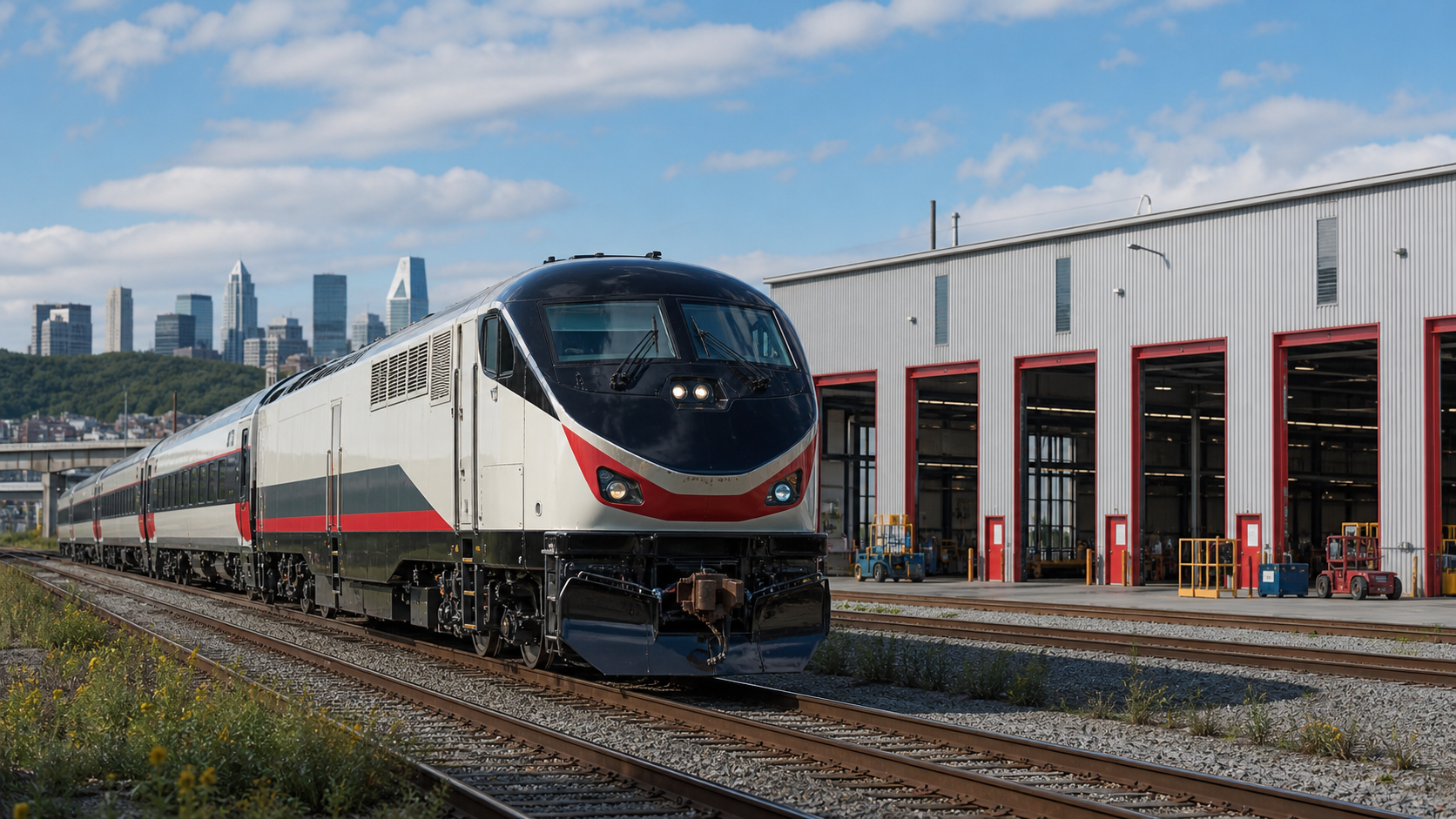
C$1.6 billion covers 45 new Stadler battery-diesel hybrid locomotives, with final assembly of up to 36 in Canada. Another C$357 million will fund a new Montreal assembly and maintenance facility, built by Pomerleau to support the Montreal Maintenance Centre. The government estimates work equivalent to 1,200 full-time jobs. ABB’s Saint-Laurent facility is expected to supply the batteries, and officials describe the order as North America’s first hybrid-powered passenger locomotives.
| Announcement | Confirmed | Not confirmed |
|---|---|---|
| Total investment | C$1.95 billion | No direct link to fares or the cost of an individual trip |
| Locomotives | 45 battery-diesel hybrid units | No batch delivery or service-entry dates |
| Canadian assembly | Up to 36 receive final assembly in Canada | This does not mean every component is made in Canada |
| Montreal facility | C$357 million for assembly and maintenance capacity | No date for a passenger-facing service change |
| Employment | Work equivalent to about 1,200 full-time jobs | No annual or permanent-job breakdown |
A locomotive is not a whole train. It provides traction; passenger coaches are a separate asset. VIA Rail has another five-year, C$150-million program to modernize 56 Chateau and Manor sleeper cars used on the Canadian and the Ocean, while a broader replacement of long-distance, regional and remote passenger cars is described as work for the coming decade. The 45-locomotive order fills an important gap, but it cannot by itself solve coach age, track congestion or timetable constraints.
Transport Canada’s procurement brief says these routes span eight provinces, more than 400 communities and roughly 12,500 kilometres. Ninety-three Indigenous communities have no alternative surface public transportation. About three-quarters of the fleet is more than 65 years old, versus a typical industry life of 35 to 40 years, and the routes carried about 198,000 passengers in 2024. For some remote residents, this is basic transport resilience, not merely a tourism upgrade.
Near-term travellers should stay conservative: check live VIA Rail notices before departure, leave connection buffers and do not assume an investment announcement makes an existing itinerary faster or more reliable. VIA Rail reported about 4.4 million passengers in 2025 and receipt of all 32 new Quebec City–Windsor Corridor trainsets, while also acknowledging operational challenges and work to stabilize Corridor performance. New equipment still has to be tested, deployed and integrated with operations.
For trip planning, browse our Canada attractions and itinerary hub, use the Canada map to understand distances, and review the Canada Strong Pass 2026 guide if eligible. This public-transport explainer contains no affiliate links.
The figures come from the July 29 Transport Canada announcement; VIA Rail’s fleet page explains its rolling stock; its 2025 results provide ridership context; the sleeper modernization release separates locomotive procurement from coach work; and Transport Canada’s LDRR procurement brief documents route reach, fleet age and remote-community dependence.
Leave a Reply